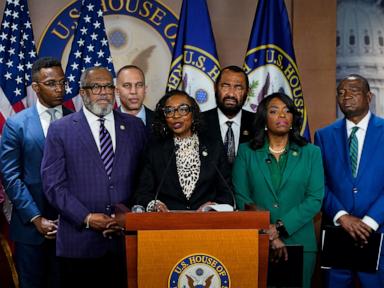
A third of Congressional Black Caucus faces potential seat loss through 2028
Nearly one-third of the Congressional Black Caucus, up to 19 members, could lose their seats due to redistricting challenges by 2028.
As many as 19 members of the Congressional Black Caucus (CBC) are at risk of losing their congressional seats by the 2028 election cycle, representing almost a third of the influential bloc's membership. This significant threat stems from ongoing redistricting battles across the United States, which can alter the political landscape and dilute the voting power of specific communities.
The redistricting process, which occurs every ten years following the U.S. Census, redraws congressional district boundaries. While intended to reflect population changes, it is often politically charged and can be used to create or dismantle safe seats for particular parties or demographic groups. For the CBC, whose members represent predominantly Black constituencies, redistricting can lead to the consolidation of voters into fewer districts, making some incumbents vulnerable, or the splitting of Black communities across multiple districts, weakening their collective representation.
The potential loss of seats for a substantial portion of the CBC raises concerns about the future of Black representation in Congress. The caucus plays a crucial role in advocating for policies that address the needs of Black communities and has historically been a powerful voice on issues of civil rights, economic justice, and social equity. A diminished CBC could impact the legislative agenda and the ability to advance these critical issues.
The outcome of these redistricting fights will likely have long-term implications for both the Democratic Party, to which most CBC members belong, and for the broader landscape of American politics. The vulnerability of these seats underscores the persistent challenges in ensuring equitable representation in the face of evolving political boundaries and demographic shifts. Further legal challenges and political maneuvering are anticipated as states finalize their district maps.
This article was written by AI based on publicly available news reporting. Original reporting by the linked source.