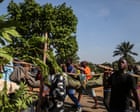
ADF Rebels Kill 30 in Eastern DRC, Disrupting Ebola Response Efforts
Rebel attacks in eastern DRC by the ADF militia have killed over 30 people, disrupting the ongoing response to the Ebola outbreak.
Rebel attacks in eastern Democratic Republic of the Congo (DRC) have claimed the lives of over 30 people in recent days, significantly complicating ongoing efforts to contain the Ebola outbreak in the region.
The Allied Democratic Forces (ADF), a militia linked to Islamic State, has been blamed for a series of raids targeting villages and the city of Beni in North Kivu province. These attacks have not only resulted in a high death toll but have also caused widespread panic, forcing residents to flee their homes.
In the early hours of Wednesday, at least 10 people were killed in attacks on three villages: Matété, Mamuli, and Kitoho. Community leader Isaac Kavalami reported that the ADF rebels set fire to motorcycles and homes, and also kidnapped an unknown number of civilians. The ADF's heightened activity in the Beni region has been a growing concern for local authorities and residents.
Earlier, just before midnight on Saturday, the militia launched an assault on Beni itself. Witnesses described scenes of terror, with people being beheaded and shot. More than 20 individuals, including men, women, and children, were reported killed, with dozens more missing. The city has been under DRC military administration since 2021, but has still faced rebel incursions.
The violence directly impacts the public health response to the current Ebola outbreak, which has already recorded 344 cases and 60 deaths across North Kivu, South Kivu, and Ituri provinces as of Wednesday. The governor of North Kivu stated that three patients with the disease had fled their clinics due to the insecurity, underscoring the direct threat to containment efforts.
The ADF, one of the most violent armed groups in eastern DRC, has been active for decades. Its affiliation with Islamic State highlights the growing international dimension of the conflict and the challenges faced by Congolese and UN forces in restoring stability.
The attacks have led to a suspension of some Ebola response activities in affected areas, as aid workers and health professionals face security risks. The displacement of people fleeing the violence also increases the risk of disease transmission.
Officials are calling for increased security measures to protect civilians and ensure the continuity of vital health services. The ongoing insecurity raises critical questions about the long-term prospects for controlling the Ebola epidemic and addressing the root causes of the persistent rebel violence in the eastern DRC.
This article was written by AI based on publicly available news reporting. Original reporting by the linked source.