AI's Role in College Grad Hiring Woes Debated Amidst 5.6% Unemployment
Recent college graduates face a challenging job market with 5.6% unemployment, sparking debate over AI's potential impact on entry-level positions.
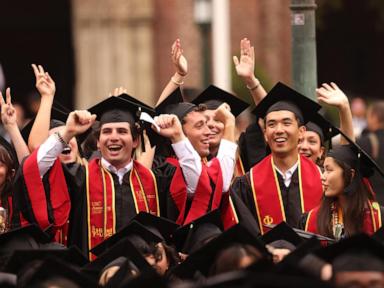
Millions of recent college graduates are entering a challenging job market, with the unemployment rate for this group standing at 5.6%, significantly higher than the overall national rate of 4.2%. This disparity marks a notable shift from just four years ago when the rates were nearly identical, leading the New York Federal Reserve to label the current job market for new graduates as "challenging."
The grim outlook for young professionals coincides with warnings from some tech leaders about the potential for artificial intelligence to displace entry-level jobs. Anthropic CEO Dario Amodei suggested last year that AI could halve U.S. entry-level positions by 2030. In theory, AI could reshape or eliminate many roles at the beginning of white-collar careers, impacting where recent graduates typically find their first professional positions.
However, analysts are divided on the extent to which AI is currently contributing to this hiring slowdown. Economists who attribute some blame to AI point to sluggish job growth in sectors perceived as vulnerable to automation. They suggest that uncertainty surrounding AI's future impact may also be deterring companies from hiring.
Conversely, skeptics highlight a broader labor market characterized by low hiring and low firing rates, with a general scarcity of new positions available for all job seekers, not just recent graduates. Harry Holzer, a professor at Georgetown University and former chief economist at the U.S. Department of Labor, acknowledged a significant slowdown in new hiring but questioned whether AI is the primary driver or merely an exacerbating factor.
A study by Stanford University suggested that AI disruption might be impacting younger workers more acutely. The research indicated that early-career workers, aged 22 to 25, in occupations highly exposed to AI, such as customer service and software development, experienced a 16% decline in employment relative to more experienced employees. In contrast, young workers in less vulnerable fields saw their employment rates align with those of older counterparts.
The Stanford researchers observed that the trend of relatively poorer job fortunes for young workers in AI-vulnerable jobs appeared to begin after the release of OpenAI's ChatGPT in late 2022. This timing suggests that the widespread adoption of advanced AI tools may have negatively affected the job prospects of some recent graduates.
Laura Ullrich, director of economic research at the job search platform Indeed, aligns with the view that AI's effects are manifesting on a sector-by-sector basis. This nuanced perspective suggests that the impact is not uniform across all industries but rather concentrated in specific areas susceptible to technological change.
As the job market continues to evolve, the precise role of AI in the current hiring challenges faced by college graduates remains a subject of ongoing analysis and debate among economists and industry experts.
This article was written by AI based on publicly available news reporting. Original reporting by the linked source.