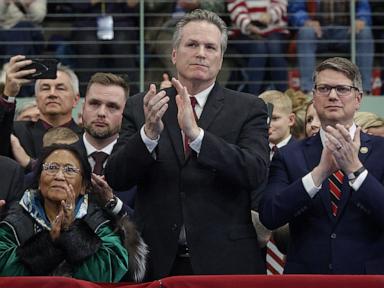
Alaska Governor Orders Probe into Alleged Voter Deception in Senate Race
Alaska Governor Mike Dunleavy is launching an investigation into claims of an organized effort to confuse voters in the state's Senate election.
Alaska Governor Mike Dunleavy has ordered a formal investigation into an alleged organized effort to manipulate the state's Senate elections by recruiting candidates intended to confuse voters. The probe follows a New York Times report detailing the alleged scheme.
Governor Dunleavy stated that the report revealed new evidence supporting concerns previously investigated by the Alaska Division of Elections in June. He emphasized that Alaskans have a fundamental right to vote for the candidate they intend to support, and deliberately tricking voters undermines election integrity.
The investigation will be conducted by the state's Department of Public Safety to determine if Alaska law was violated. Dunleavy indicated that potential criminal charges or civil actions could be pursued if wrongdoing is found. "The evidence will determine what happens next," he said, adding that any individuals or organizations found to have broken the law "must be held accountable."
The New York Times report, citing 12 sources, text messages, and documents, alleged that members of Senator Mary Peltola's campaign, her lawyers, and senior aides at the Democratic Senatorial Campaign Committee (DSCC) were involved in efforts to encourage a Republican candidate named Dan J. Sullivan to run. This candidate shares the same name as the incumbent Republican Senator Dan Sullivan.
This tactic, reportedly referred to internally as the "ballot composition project," is designed to potentially siphon votes from Senator Sullivan and benefit Peltola, a Democrat. The report suggests the recruited candidate was intended to act as a spoiler.
Alaskans for Mary, the campaign committee for Representative Mary Peltola, has denied any involvement with the Dan J. Sullivan campaign through a spokesperson. The DSCC also issued a statement to ABC News asserting its non-involvement with Dan J. Sullivan.
In its statement, the DSCC noted that Republicans have a history of recruiting and supporting candidates to bolster their own campaigns. This comment appears to draw a parallel to tactics sometimes employed by various political parties.
The governor's directive underscores the seriousness with which election interference allegations are being treated in Alaska, particularly given the close nature of past elections and the potential for such schemes to impact outcomes. The investigation aims to uncover the full extent of the alleged effort and ensure accountability.
This article was written by AI based on publicly available news reporting. Original reporting by the linked source.