Albanians Set Fire to Buildings, Clash with Police Demanding PM's Resignation
Protesters in Albania torched government buildings and banks, clashing with riot police in escalating demonstrations calling for the prime minister's ouster.
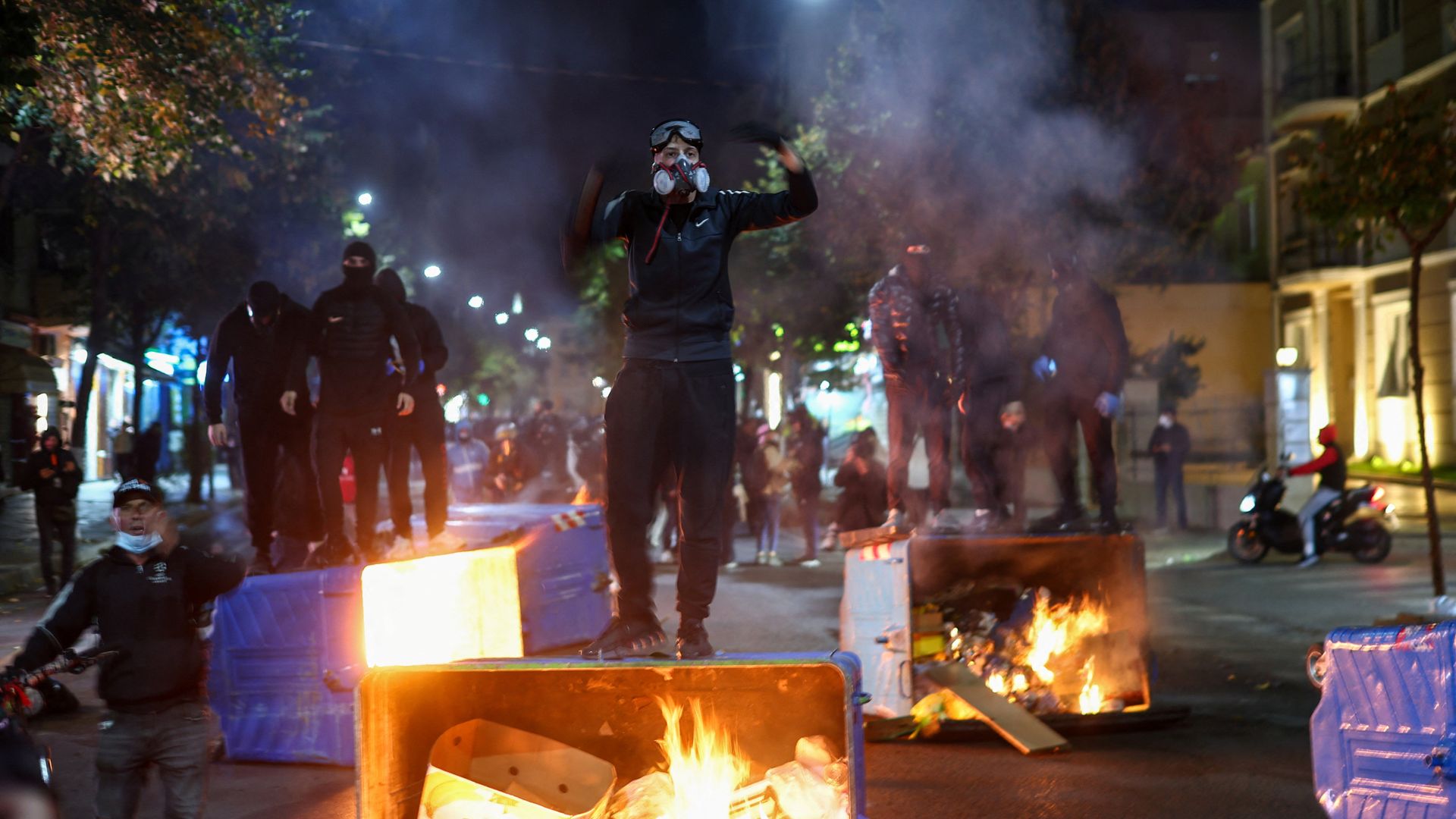
Demonstrators in Albania set fire to government buildings and banks, and smashed shop windows during renewed clashes with riot police on Thursday. The escalating protests are fueled by demands for the prime minister's resignation.
The unrest comes amid widespread anger over alleged corruption and the government's handling of the economy. Protesters accuse the current administration of enriching itself while the general population struggles with rising costs and limited opportunities.
Eyewitness accounts described scenes of chaos as protesters, many wearing masks, engaged in running battles with police in the capital city. Police deployed tear gas and water cannons in an attempt to disperse the crowds, but demonstrators retaliated by throwing stones and other projectiles. Several banks and government offices sustained significant damage, with flames visible from a distance.
These latest demonstrations signal a hardening of opposition sentiment and raise concerns about the stability of the current government. The intensity of the violence suggests a deep-seated frustration that authorities may find difficult to quell without significant concessions or changes in policy.
Political analysts suggest that the protests are a culmination of years of discontent, exacerbated by recent revelations of alleged financial impropriety involving figures close to the government. The opposition has capitalized on this anger, channeling it into organized demonstrations.
Previous protests have occurred, but the scale of destruction seen on Thursday marks a significant escalation. The government has, in the past, dismissed similar demands as politically motivated attempts to destabilize the country.
Officials have condemned the violence, vowing to bring those responsible for the destruction to justice. However, the protesters' core demands for accountability and the prime minister's resignation remain unmet, indicating that the conflict is likely to continue.
The coming days will be crucial in determining whether the government can de-escalate the situation through dialogue or if further confrontations are inevitable. The international community will be watching closely for any signs of democratic backsliding or further instability in the Balkan nation.
This article was written by AI based on publicly available news reporting. Original reporting by the linked source.