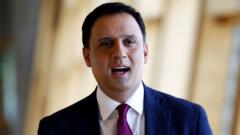
Anas Sarwar Promoted to Andy Burnham Government, Another Starmer Critic Elevated
Anas Sarwar joins Andy Burnham's government as a minister via the House of Lords, marking another promotion for a former critic of Keir Starmer.
Scottish Labour leader Anas Sarwar is set to be appointed a minister in Andy Burnham's government, taking a seat in the House of Lords. This move signifies the promotion of another prominent figure who had previously called for Sir Keir Starmer's resignation as prime minister.
Sarwar publicly stated in February that Sir Keir should step down, a moment that appeared to create significant jeopardy for the then-prime minister and threatened his authority. At the time, such calls were notable given the subsequent public displays of loyalty from cabinet ministers to Starmer.
Now, five months later, Sarwar will transition from Holyrood to Westminster. He will join a government that includes Miatta Fahnbulleh, who resigned as energy secretary from Starmer's administration citing a loss of faith. Ed Miliband, now Foreign Secretary, had also reportedly suggested to Starmer that his tenure was over during Starmer's final weeks in office.
Other figures who held prominent roles in the previous administration and have now been appointed to key positions in Burnham's cabinet include John Healey, former defence secretary, and Wes Streeting, former health secretary. They are now serving as Chancellor and Defence Secretary, respectively.
These appointments occur against a backdrop of internal party dynamics. Steve Reed, who had previously defended Starmer, wrote to Burnham expressing hope that loyalty shown to him would now extend to the new leader. Reed's comments highlight the underlying "private hurt and anger" stemming from recent political events within the party.
The transition in leadership, while not marked by a protracted public contest or multiple contenders for the leadership role, has nonetheless been a challenging period for the Labour Party. The consequences of this period are still manifesting, as indicated by public remarks from figures like Darren Jones, who questioned the funding of a proposed VAT cut on domestic electricity bills.
Political analysts note that while there is widespread support for Burnham among Labour MPs, the sentiments expressed by figures like Reed serve as a reminder of the human element involved in these political shifts. Each individual's decisions and actions were shaped by their circumstances, outlook, and judgment during a period of significant uncertainty.
The broader implications of these promotions suggest a potential reshaping of the party's direction and the integration of individuals who were vocal during the previous leadership's challenges. The coming months will likely reveal how these dynamics play out within the party's parliamentary ranks and its policy agenda.
This article was written by AI based on publicly available news reporting. Original reporting by the linked source.