Ancient Byzantine City Unearthed in Egypt's Western Desert
Archaeologists discovered a well-preserved fourth-century Byzantine city in Egypt's Dakhla oasis, revealing urban life and economic activities.
Archaeologists in Egypt have announced the discovery of a remarkably well-preserved Byzantine-era city in the country's western desert. The fourth-century settlement, located in the Dakhla oasis within the New Valley governorate, offers significant insights into daily life, urban development, and economic activities during the period when Egypt was part of the Byzantine empire.
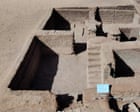
The unearthed city features distinct residential and religious structures, with a prominent basilica-style church at its heart. This discovery provides a rare glimpse into the social and architectural landscape of the era.
Key findings include a grid-like street layout with north-south thoroughfares intersected by east-west streets, forming open squares and public spaces. Hisham el-Leithy, secretary general of the Supreme Council of Antiquities, stated that the layout reveals organized urban planning. A basilica dating to the mid-fourth century overlooks the main streets, accompanied by the remains of two watchtowers designed to protect the city's outskirts, according to Mahmoud Massoud, who heads the archaeological mission.
The implications of this find are substantial for understanding Byzantine Egypt. The well-preserved nature of the site allows for detailed study of its inhabitants' lives, economic pursuits, and religious practices. The Dakhla oasis itself is recognized for its historical significance and is currently on Unesco's tentative list for World Heritage status.
Further details from the site include a heavily fortified structure with thick defensive walls, indicating a need for security. Numerous houses were found to contain reception halls and vaulted roofs, suggesting a sophisticated level of domestic architecture. The presence of bread ovens, kitchens, stone grinding tools, and bronze coins points to the economic activities and daily routines of the residents.
Among the specific structures identified is the house of Tisous, a church deacon, which has been dated to the second half of the fourth century. The discovery of such a detailed domestic space provides a personal connection to the past inhabitants of the city.
The archaeological mission also uncovered pottery fragments and various tools, which will be crucial for dating and understanding trade networks. The coins, in particular, can offer precise chronological markers and information about the economic reach of the settlement.
This discovery adds a significant chapter to the history of Byzantine Egypt, a period less extensively documented archaeologically in this region compared to earlier pharaonic eras. The ongoing research at the Dakhla oasis site is expected to yield further revelations about this influential period in Egyptian history.
This article was written by AI based on publicly available news reporting. Original reporting by the linked source.