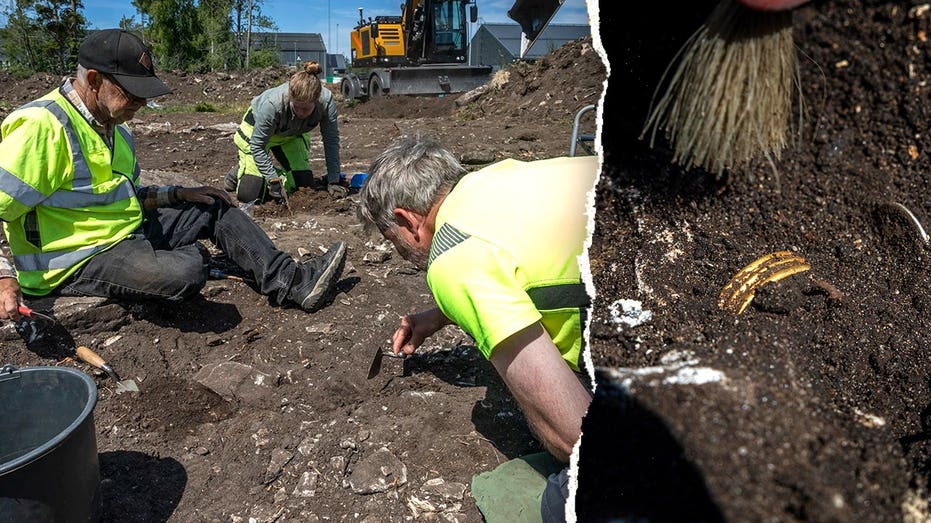
Ancient Roman coin hoard discovered in Sweden includes two fakes
A significant Roman coin hoard found on Gotland, Sweden, contains ancient counterfeits, offering insights into Roman economic practices.
An exceptional hoard of Roman coins has been unearthed on the Swedish island of Gotland, offering a rare glimpse into ancient trade and economic practices. The discovery, made at a military base, includes a substantial collection of Roman silver denarii, a currency that circulated widely across the Roman Empire and beyond.
Gotland, strategically located in the Baltic Sea, was a significant trading hub during the Roman period. The presence of such a large coin hoard suggests extensive commercial activity and the reach of Roman economic influence into Northern Europe. Archaeologists are particularly interested in how these coins traveled so far from the Roman heartland and the role they played in local economies.
The significance of the find is amplified by the presence of at least two coins identified as ancient counterfeits. These imitations, skillfully crafted to deceive, provide invaluable information about the challenges of Roman currency verification and the sophistication of ancient forgers. Experts believe these fakes were likely produced to pass as genuine currency, either within the empire or in regions where Roman coinage was less familiar.
This discovery allows historians and archaeologists to study the dynamics of Roman monetary policy and its enforcement. The existence of counterfeits suggests that the Roman authorities faced ongoing issues with currency integrity, and that individuals actively sought to exploit the system. The study of these coins could shed light on the methods used to detect fakes in antiquity and the economic impact of such illicit activities.
While the exact number of coins in the hoard has not been fully detailed, initial reports suggest it is a considerable find. The coins are primarily silver denarii, a standard denomination for everyday transactions and larger trade. Their condition and the context of their burial will be crucial in dating the hoard and understanding its purpose, whether it was hidden for safekeeping or lost.
The presence of counterfeits is not entirely unexpected, as evidence of ancient coin forgery has been found in various Roman contexts. However, a hoard containing such items provides a unique opportunity to analyze the fakes alongside genuine specimens from the same period and region. This allows for direct comparison of minting techniques, metal composition, and stylistic variations.
Researchers will meticulously examine the composition and craftsmanship of both the genuine and counterfeit coins. This analysis can reveal details about the materials available to ancient mints and forgers, as well as the technological capabilities of the time. Understanding how these imitations were made and distributed can also offer insights into the economic networks and illicit markets that operated within and around the Roman Empire.
The ongoing investigation into this Gotland hoard promises to contribute significantly to our understanding of Roman economic history, the challenges of monetary control, and the complex interactions between the Roman world and its northern neighbors. Further study is expected to reveal more about the specific origins of the coins and the story behind their burial.
This article was written by AI based on publicly available news reporting. Original reporting by the linked source.