Andy Burnham becomes UK Prime Minister, vows to end rough sleeping
Andy Burnham is the new UK Prime Minister, promising to end rough sleeping and tackle the cost of living crisis.
Andy Burnham has officially become the United Kingdom's Prime Minister, succeeding Sir Keir Starmer. This transition marks the fourth change in premiership within five years and the seventh since 2016, highlighting a period of significant political instability.
Burnham, who was elected Labour leader last week, assumed the role of Prime Minister following a formal audience with King Charles III at Buckingham Palace. His appointment comes after Sir Keir Starmer’s resignation, with the outgoing leader having had his final private audience with the monarch.
In his inaugural speech delivered from Downing Street, Prime Minister Burnham immediately set out his key priorities. He pledged to end rough sleeping across the country, backed by a commitment of an additional £340 million allocated over the next five years. Burnham also announced plans for a new 10-year national strategy and a vision to rebuild the economy by bringing essential services back under public control.
Recognizing the immediate pressures faced by the public, Burnham stated that measures to address the cost of living crisis would begin on Tuesday. Further policy shifts are anticipated, including reforms to the education system aimed at improving youth employment, an increase in the construction of council housing, and a commitment to maintaining defence funding while adhering to the UK's fiscal rules on spending and debt.
The new Prime Minister is expected to announce his cabinet appointments on Monday afternoon. This process involves selecting his "own top team," leading to the departure of several ministers from the previous administration. Notably, Rachel Reeves has confirmed she is leaving government after declining another cabinet role. Other Starmer cabinet members, including Peter Kyle, David Lammy, and Richard Hermer, have also announced their resignations.
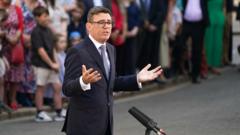
Burnham’s address from outside 10 Downing Street departed from recent tradition. He delivered his speech without a lectern or notes, a conscious choice he indicated was a nod to the recent political churn and the nation's need for stability. He emphasized the importance of politicians improving their performance and rising to meet the current challenges.
The former Mayor of Greater Manchester's ascension to the premiership is a significant political development. His agenda signals a potential shift in national policy, with a strong focus on social issues and economic restructuring. The coming weeks will reveal the full scope of his administration and the impact of his proposed policies.
Questions remain about the specifics of the 10-year plan and the immediate economic measures to combat the cost of living. The composition of his new cabinet will also be closely watched for indications of his governing style and political direction.
This article was written by AI based on publicly available news reporting. Original reporting by the linked source.