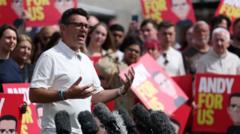
Andy Burnham Bids for Labour Leadership After Makerfield By-election Win
Andy Burnham, former Greater Manchester mayor, is vying for Labour leadership, securing a significant win in the Makerfield by-election.
Andy Burnham has thrown his hat into the ring to become the next leader of the Labour Party, following Sir Keir Starmer's resignation. Burnham, the newly elected MP for Makerfield, confirmed his intention to bid for the top job, a move that has garnered significant support, including from Wes Streeting, Starmer's former health secretary.
Burnham's path to potentially leading the Labour Party and Number 10 Downing Street has been significantly bolstered by his decisive victory in the Makerfield by-election. He secured a substantial win, increasing Labour's vote share to nearly 55%, a notable jump from the 2024 general election results. The Reform UK candidate, who finished second, trailed by over 9,000 votes.
Having previously run for the Labour leadership twice and fallen short, Burnham's current bid appears to be gaining considerable momentum. His successful return to Parliament as the MP for Makerfield, a seat he will be sworn into on Monday, positions him as a front-runner in the race. The endorsement from Wes Streeting, who had also been considered a potential candidate, is seen as a key factor in Burnham's strengthened position.
The implications of Burnham's potential leadership could reshape the Labour Party's direction. His focus on regional devolution and public services, honed during his tenure as Greater Manchester mayor, may influence the party's policy platform. His ability to unite different factions within the party will be crucial as the leadership contest unfolds.
Born in Liverpool in 1970, Burnham's upbringing in Culcheth, Cheshire, was marked by his parents' strong Labour affiliations. He has spoken of being inspired to join the party at 14 by the BBC drama "Boys from the Blackstuff." A lifelong Everton supporter and former Lancashire schoolboys cricketer, his early life showed a competitive spirit and a deep connection to his roots.
His academic journey led him to study English at Cambridge University. In his writings, Burnham has reflected on experiencing feelings of imposter syndrome during his university years. However, his passion for northern indie music, citing bands like The Smiths and The Stone Roses, provided a sense of belonging and connection to Manchester's cultural scene.
Burnham's political career began with early success in school mock elections, foreshadowing his future political ambitions. His return to Parliament after a period as Greater Manchester mayor signifies a significant shift in his career trajectory, moving from regional leadership back to national politics with aspirations for the highest office.
As the leadership race progresses, attention will be on Burnham's ability to articulate a compelling vision for the country and to secure the necessary support from within the Labour Party. His past leadership bids and his experience in regional governance provide a unique backdrop to his current campaign.
This article was written by AI based on publicly available news reporting. Original reporting by the linked source.