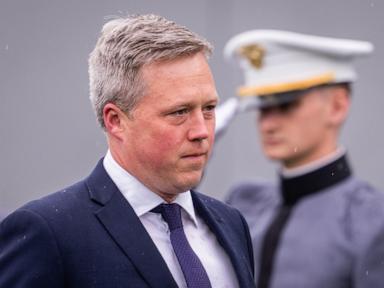
Army Secretary Dan Driscoll Resigns Amid Tensions With Defense Secretary Hegseth
Army Secretary Dan Driscoll resigned Monday evening after growing tensions with Defense Secretary Pete Hegseth over personnel decisions.
Army Secretary Dan Driscoll has resigned from his post, with President Donald Trump accepting his departure Monday evening. The resignation comes amid escalating tensions between Driscoll and Defense Secretary Pete Hegseth, according to a U.S. official. The White House acknowledged Driscoll's resignation, issuing a statement that thanked him for his service and lauded his effectiveness in advancing the administration's agenda for the Army.
White House spokesperson Anna Kelly stated that Secretary Driscoll had been "highly effective in advancing President Trump’s agenda to Make America Strong Again at the Department of the Army by providing outstanding leadership during historic military operations, restoring an emphasis on readiness and lethality, assisting with negotiations between Russia and Ukraine, and more." Kelly added that "The United States Army is more powerful than ever thanks to his work alongside the Commander-in-Chief and Secretary of War."
Sources within the U.S. government indicate that Driscoll and Hegseth have clashed on several significant matters since assuming their roles in 2025. A primary point of contention has been Hegseth's decision to dismiss or sideline numerous senior officers who were candidates for promotion to the rank of general.
One notable instance involved Hegseth's unexplained firing of Gen. Randy George, the former Army Chief of Staff, in April. Secretary Driscoll had maintained a close professional relationship with General George and, when questioned at a congressional hearing, stated he was unaware of the reasons behind George's removal.
Driscoll's tenure also included a significant diplomatic assignment in the fall, when President Trump selected him to lead an initiative aimed at restarting peace talks between Russia and Ukraine. This role extended beyond the typical responsibilities of a service secretary, which primarily focus on the training and equipping of military personnel.
Driscoll reportedly enjoyed strong support on Capitol Hill and had established connections within the White House. These relationships were partly attributed to his prior association with Vice President JD Vance, whom he met at Yale Law School after serving as a cavalry officer in the 10th Mountain Division.
The differing approaches between Driscoll and Hegseth highlight potential friction points within the Department of Defense regarding leadership appointments and strategic direction. The White House statement, while praising Driscoll, did not directly address the tensions with Hegseth.
The departure of a service secretary amid such reported disagreements raises questions about the stability of leadership within the Army and the broader implications for military readiness and diplomatic efforts. Further details regarding the specific policy disagreements or the process of selecting a successor are not yet public.
This article was written by AI based on publicly available news reporting. Original reporting by the linked source.