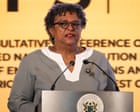
Barbados PM Mia Mottley Unveils Slavery Reparations Manifesto
Barbados PM Mia Mottley announced a new manifesto for slavery reparations, updating a 10-point plan to include gender-based violence and climate justice.
Barbados’s prime minister, Mia Mottley, has unveiled a new manifesto from Caribbean leaders that strengthens the “moral, ethical and legal case” for reparations for the harms caused by centuries of enslavement. Mottley announced the updated plan at a significant conference in Ghana aimed at advancing the pursuit of reparatory justice, following a recent United Nations resolution that recognized the trafficking of enslaved Africans as the gravest crime against humanity.
The manifesto builds upon the existing 10-point plan developed by the Caribbean Community (Caricom). A key addition to this updated document is a specific call for compensation related to gender-based violence, acknowledging the disproportionate suffering of women and girls during the era of slavery. Data suggests that women constituted around 30% of the estimated 20 million Africans forcibly transported across the Atlantic, with at least 1.2 million enslaved women enduring sexual violence.
Mottley emphasized the validity of this new demand, stating that compensation for gender-based violence and harm to families is "no different from the compensation that has been awarded to other nationalities such as the Japanese." The updated manifesto, which has been reviewed by The Guardian, also establishes a strong connection between climate justice and slavery reparations, arguing they are “inextricably linked.” Furthermore, it calls for renewed support for Indigenous populations in the Caribbean, who faced genocides upon the arrival of Europeans.
This comprehensive document, which is pending final approval from Caribbean governments, outlines Caricom's demand for monetary compensation from former colonial powers. The plan moves beyond a singular focus on direct descendants of enslaved people, broadening the scope to include reparations for systemic damages that continue to affect the region today.
The conference in Ghana brought together leaders and representatives to strategize on the next steps for securing reparations from the United Kingdom and other European nations involved in the transatlantic slave trade. The UN resolution, adopted earlier, provided a significant international platform for these ongoing discussions.
While the manifesto details the historical injustices and their lasting economic, social, and psychological impacts, it also proposes a framework for future action. This includes proposals for development aid, debt cancellation, and investments in education and healthcare within Caribbean nations, aimed at rectifying the enduring consequences of colonial exploitation.
Experts in international law and post-colonial studies have noted the manifesto’s robust legal and ethical arguments, drawing parallels to other historical reparations settlements. The inclusion of climate justice and Indigenous rights reflects a contemporary understanding of the interconnectedness of historical wrongs and present-day global challenges.
The coming months will be crucial as Caribbean governments deliberate on the manifesto. The success of this initiative will depend on unified regional action and sustained diplomatic engagement with former colonial powers to address these long-standing claims for justice and compensation.
This article was written by AI based on publicly available news reporting. Original reporting by the linked source.