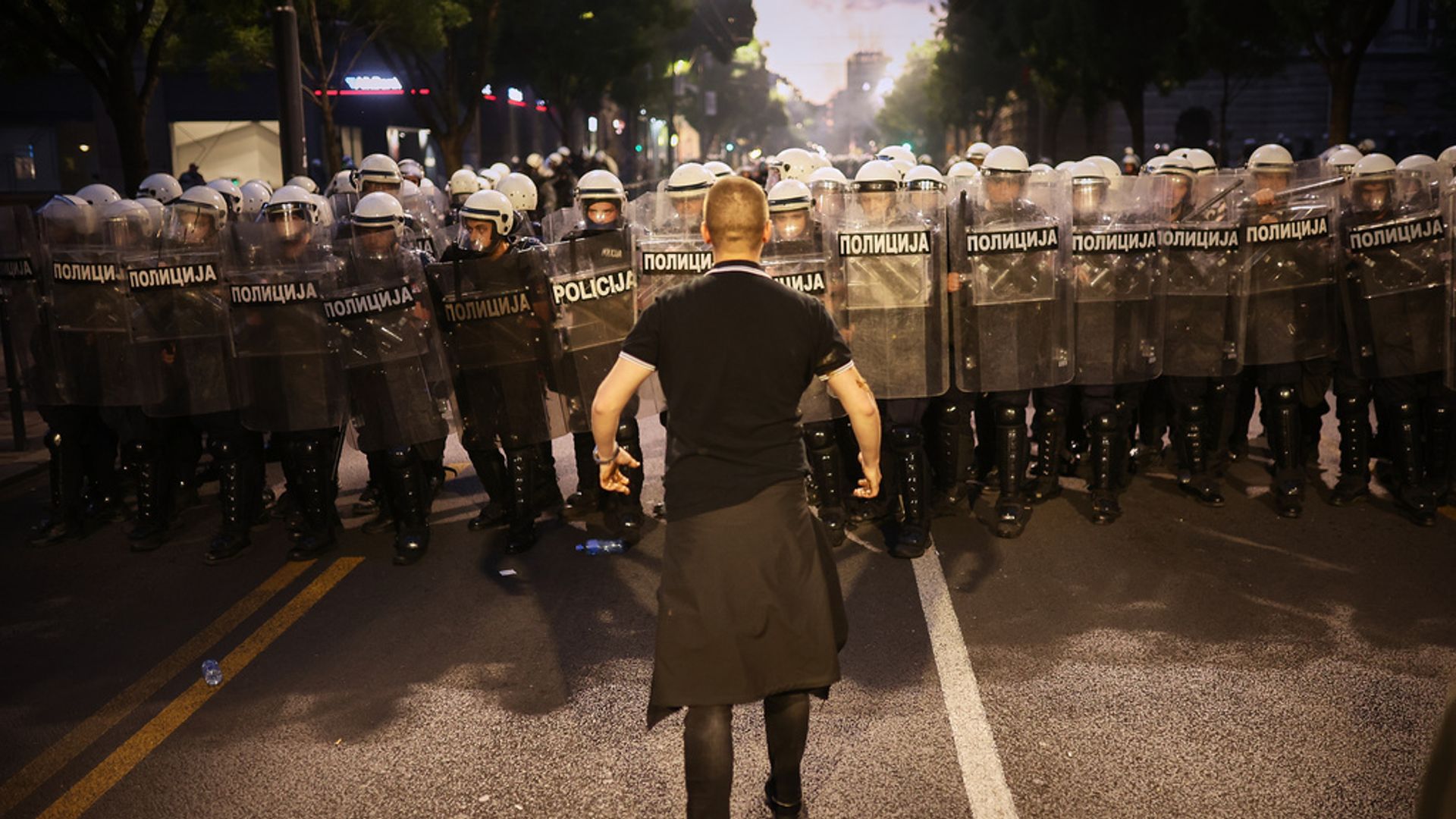
Belgrade Clashes Erupt as Tens of Thousands Protest Serbian Government
Riot police clashed with protesters in Belgrade after tens of thousands demonstrated against the Serbian government.
Clashes broke out in Belgrade on Saturday as tens of thousands of people took to the streets to protest against the Serbian government. The demonstration, which began peacefully, escalated into confrontations between protesters and riot police in the capital city.
The protest was organized to voice opposition to the current administration's policies and perceived authoritarian tendencies. Protesters carried banners and chanted slogans critical of President Aleksandar Vučić and his government, highlighting concerns over media freedom and democratic institutions.
Reports from the scene indicated that tensions rose as the main rally concluded, with some demonstrators moving towards government buildings. Police in riot gear intervened, leading to scuffles and the use of tear gas in some areas. Several arrests were reported by local media, though official figures have not yet been released.
The events in Belgrade underscore a period of significant political discontent in Serbia. The protests reflect a broader trend of public frustration with governance and economic conditions, raising questions about the stability of the current political climate and the government's response to public dissent.
This demonstration follows a series of smaller protests and opposition activities in recent months, indicating a growing movement challenging the ruling Serbian Progressive Party (SNS). Critics have frequently pointed to alleged irregularities in elections, a lack of press freedom, and concerns about corruption as key drivers for public dissatisfaction.
The government has consistently denied allegations of authoritarianism, with President Vučić often stating that his administration is working in the best interests of Serbia and its citizens. Officials have also accused opposition groups of seeking to destabilize the country for political gain.
International observers and human rights organizations have previously raised concerns about the state of democracy and media freedom in Serbia. These concerns often relate to the concentration of power, the treatment of independent media outlets, and the independence of judicial institutions.
As the situation continues to unfold, attention will be on the government's official response to the protests and the judiciary's handling of any arrests. The scale of Saturday's demonstration suggests that public opposition remains a significant force, and the long-term implications for Serbian politics are yet to be determined.
This article was written by AI based on publicly available news reporting. Original reporting by the linked source.