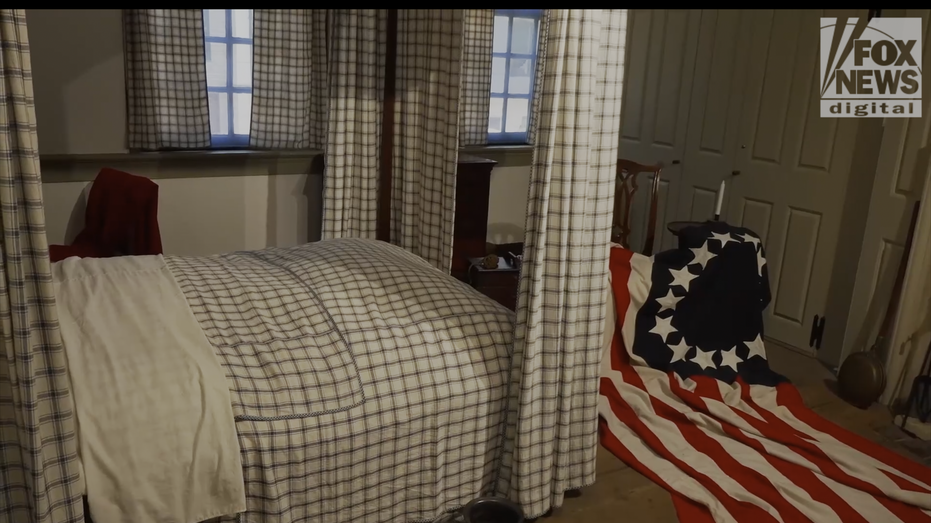
Betsy Ross: The Untold Story of Sewing the First American Flag
Betsy Ross, a Philadelphia seamstress, is credited with sewing the first American flag, a story that gains new relevance as the U.S. approaches its 250th birthday.
As the United States prepares to celebrate its 250th birthday, the legend of Betsy Ross and her role in creating the first American flag continues to capture the nation's imagination. While the exact historical accuracy of her direct involvement in designing the iconic Stars and Stripes remains a subject of debate among historians, the narrative of Ross, a skilled seamstress from Philadelphia, sewing the first flag has become deeply embedded in American folklore.
The story, largely passed down through generations of her family, suggests that Ross met with General George Washington and other dignitaries in 1776. According to family accounts, they presented her with a sketch of a flag and asked her to sew it. Ross is said to have suggested a few modifications, including changing the six-pointed star to a more easily replicated five-pointed star, which was then incorporated into the design.
This pivotal moment, if it occurred as family tradition holds, would have placed Ross at the heart of a nascent nation's identity-building. Beyond the legend, Betsy Ross was a real figure in early American history. She was a widowed upholsterer and flag maker who operated her own business in Philadelphia during the Revolutionary War. Her skills and livelihood were directly tied to the revolutionary cause, making the idea of her contributing to a national symbol plausible.
The enduring appeal of the Betsy Ross story highlights a national fascination with the origins of American symbols. As the country looks towards its semiquincentennial, figures like Ross represent tangible links to the founding era, embodying patriotism, skill, and the contributions of ordinary citizens to extraordinary events.
Historians generally agree that while Betsy Ross likely made flags for the Continental Army, the specific account of her designing or sewing the very first Stars and Stripes is not supported by contemporary documents. The story gained prominence in the late 19th century, championed by her grandson, William J. Canby, who presented his claims to the Historical Society of Pennsylvania in 1870.
Despite the lack of definitive proof from the era, the narrative persists. It resonates with a desire to connect with the nation's founding and to recognize the contributions of women in a period where their roles were often overlooked. Ross's alleged act of bravery, potentially risking her life and business by associating with the revolutionary cause, adds a layer of dramatic appeal to her legend.
The controversy surrounding the precise details of the flag's creation does little to diminish the symbolic importance of Betsy Ross in American culture. She has become an icon representing American ingenuity and patriotism, her name synonymous with the birth of the nation's most recognizable emblem.
As America gears up for its 250th anniversary, the story of Betsy Ross serves as a reminder of the many individuals, both known and unknown, whose efforts contributed to the nation's formation. The legend continues to inspire, prompting reflection on the symbols that unite the country and the diverse threads that weave the fabric of American history.
This article was written by AI based on publicly available news reporting. Original reporting by the linked source.