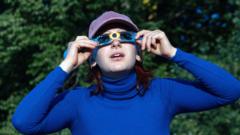
Blurred vision, dark spots key signs of eclipse eye damage
Eye experts warn of blurred vision, light sensitivity, and dark spots as potential signs of solar retinopathy after eclipse viewing.
Eye specialists are urging the public to monitor for potential vision damage following Wednesday's solar eclipse, with symptoms including blurred vision, central blind spots, and increased light sensitivity.
Staring at the sun, even when partially obscured during an eclipse, can cause a condition known as solar retinopathy. This occurs when the intense light and ultraviolet radiation damage the retina, the light-sensitive tissue at the back of the eye, particularly the cells responsible for sharp central vision.
Consultant eye surgeon Alexander Ionides noted that symptoms can manifest several hours after exposure, as the retina lacks pain receptors. "It's a central spot in the visual field... you may have a distortion. It'll be a grey or a yellow or a dark spot right in the very centre of your vision. It doesn't hurt," he explained.
Experts emphasize that ordinary sunglasses are insufficient for eclipse viewing. Only certified solar eclipse glasses offer adequate protection. The delayed onset of symptoms means it is too early to confirm if any damage has occurred from the recent event.
Following the 1999 total solar eclipse visible in the UK, approximately 70 individuals sustained vision damage, with many experiencing effects after less than a minute of unprotected viewing. The instinct to wince and look away from the sun is often suppressed during an eclipse because the reduced brightness can mask the inherent danger.
Ionides advised that if individuals suspect eye damage, they should seek urgent medical attention. Options include visiting a local optician, who can perform retinal scans for solar retinopathy and refer patients to hospital eye units if necessary. Many hospitals maintain on-call eye doctors for emergencies.
Compared to the significant influx of worried patients after the 1999 eclipse, Ionides reported that his hospital has received far fewer inquiries this time. He suggested that the partial nature of Wednesday's eclipse, where the sun remained relatively bright, may have deterred more people from attempting prolonged direct viewing.
Further details on symptoms to watch for include eye pain, redness, grittiness, irritation, and sudden changes in sight. The lack of immediate pain makes self-diagnosis difficult, underscoring the importance of heeding expert warnings and seeking professional assessment if any visual disturbances occur.
This article was written by AI based on publicly available news reporting. Original reporting by the linked source.