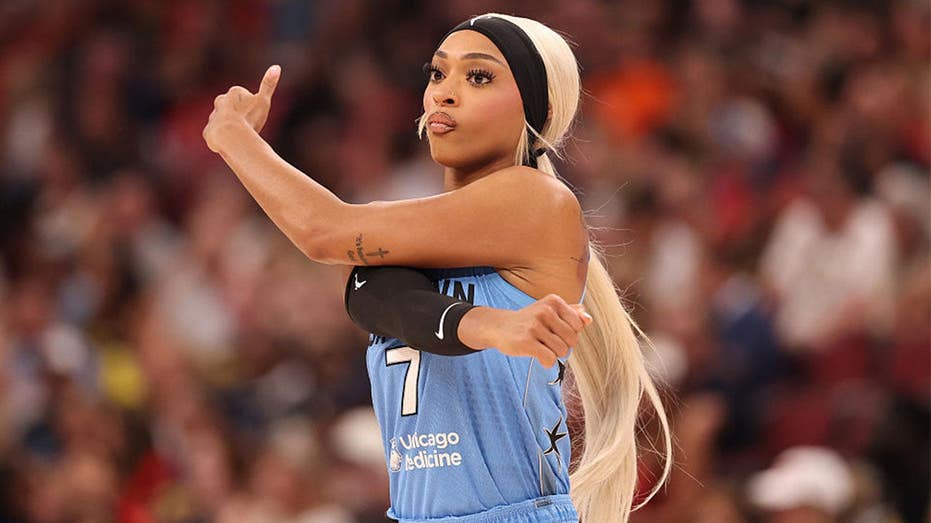
Boomer Esiason Slams WNBA's DiJonai Carrington Over 'White Privilege' Outburst
Former NFL MVP Boomer Esiason strongly criticized WNBA player DiJonai Carrington's 'white privilege' comment following her ejection from a game.
Former NFL Most Valuable Player Boomer Esiason has launched a sharp critique of WNBA player DiJonai Carrington, following the latter's controversial social media post after being ejected from a game. Carrington, a player for the Connecticut Sun, was ejected during a game against the Las Vegas Aces on August 10, 2026. Following the incident, she posted on social media platform Threads, stating, "It’s giving white privilege." This statement has drawn significant backlash from various figures in the sports world.
Esiason, speaking on his "Boomer and Gio" radio show, questioned the appropriateness of Carrington's comment and suggested it creates a difficult environment for fans and the league. He expressed bewilderment at how fans are expected to interpret such statements in the context of professional sports, particularly when they appear to link on-court performance or officiating decisions to race.
The incident occurred during a heated game where Carrington was assessed a flagrant foul and subsequently ejected. While Carrington has not offered further clarification on the specific meaning behind her "white privilege" remark, the WNBA has remained largely silent on the matter. This silence has been noted by some observers as a potential double standard, especially when compared to how the league has addressed other player controversies.
Carrington's comment has ignited a broader debate about the intersection of sports, social issues, and race. Critics, including former NFL players, have called out Carrington for her statement, arguing that it is divisive and inappropriate for the sports arena. The situation highlights a growing tension in professional sports leagues, where social and political commentary from athletes often sparks intense public discussion and scrutiny.
This is not the first time WNBA players' social media activity or on-court conduct has generated controversy. The league has navigated several high-profile incidents in recent years, leading to discussions about the role of politics in sports. The perceived silence from the WNBA in this instance has amplified the criticism, with some suggesting it reflects an inconsistency in how the league handles player-related controversies.
Boomer Esiason's strong reaction underscores the polarized views surrounding such statements. As a prominent voice in sports media, his commentary adds weight to the criticism leveled against Carrington. The discussion extends beyond individual player actions to encompass the responsibility of athletes and leagues in managing public discourse.
Further analysis of the situation involves examining the potential impact on fan engagement and the league's brand. When athletes make statements that are perceived as divisive or politically charged, it can alienate segments of the fanbase and complicate the league's efforts to maintain a focus on athletic competition. The WNBA, like other professional sports organizations, faces the challenge of balancing freedom of expression with the need to foster an inclusive and unifying environment.
The unresolved nature of Carrington's comment and the WNBA's muted response leave open questions about how such situations will be handled moving forward. The incident serves as a case study in the complex dynamics of athlete activism and the public's reaction to it within the professional sports landscape.
This article was written by AI based on publicly available news reporting. Original reporting by the linked source.