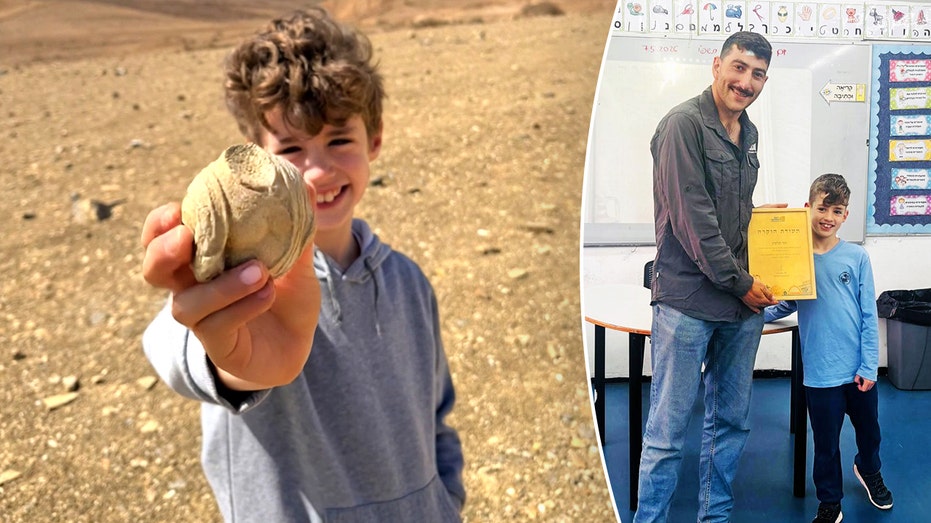
Boy's Roman Statuette Find Stuns Archaeologists with 1,700-Year-Old Relic
An 8-year-old boy's discovery of a 1,700-year-old Roman statuette during a show-and-tell hunt has astonished archaeologists.
An 8-year-old boy has made an extraordinary archaeological discovery, unearthing a 1,700-year-old Roman statuette while participating in a show-and-tell hunt. The remarkably preserved artifact was found in the United Kingdom.
The find has generated significant excitement within the archaeological community, highlighting the potential for significant historical discoveries even in unexpected circumstances. Such artifacts offer invaluable insights into the daily lives, beliefs, and artistic practices of ancient civilizations.
Details surrounding the specific type of statuette and its condition are still emerging, but initial reports suggest it dates back to the Roman period. The young discoverer's enthusiasm for the find has been widely praised, underscoring the importance of engaging younger generations with history and archaeology.
Archaeologists are now expected to conduct further investigations to determine the statuette's exact origin, purpose, and significance within the context of Roman Britain. The discovery could shed new light on Roman settlements or activities in the region where it was found.
Roman Britain spanned from 43 AD to around 410 AD. During this period, the Romans established a complex society with advanced infrastructure, art, and religious practices. Statuettes like the one discovered were often used for religious worship, as decorative items, or as toys.
Experts emphasize that accidental discoveries, particularly by amateur enthusiasts or children, have historically played a crucial role in uncovering significant archaeological sites and artifacts. These finds often lead to more extensive research and preservation efforts.
The context of the "show-and-tell hunt" implies a structured activity, possibly educational, that encouraged participants to search for items of interest. The success of this particular hunt, however, far exceeded typical expectations.
Further analysis will likely involve experts in Roman art and archaeology to authenticate the statuette, date it precisely, and understand its cultural implications. The find also serves as a potent reminder of the layers of history that lie beneath the surface, waiting to be uncovered.
This article was written by AI based on publicly available news reporting. Original reporting by the linked source.