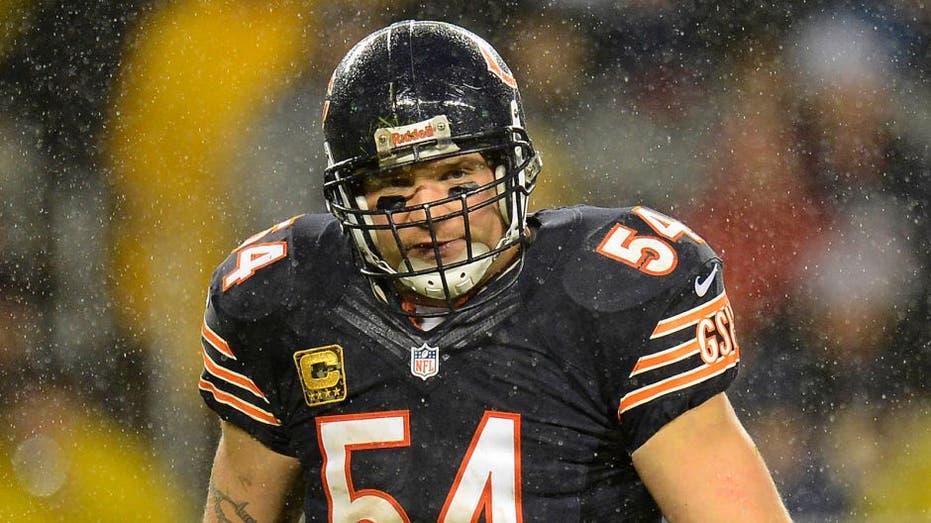
Brian Urlacher: Kaepernick protests would not have survived on my Bears team
NFL Hall of Famer Brian Urlacher stated Colin Kaepernick's protests would have been unwelcome in his Chicago Bears locker room.
Chicago Bears legend Brian Urlacher has publicly criticized former NFL quarterback Colin Kaepernick's national anthem protests, asserting that such demonstrations would not have been tolerated during his playing days.
Urlacher, a Hall of Fame linebacker who spent his entire career with the Bears from 2000 to 2012, shared his views on "The Craig Carton Show," expressing strong disapproval of Kaepernick's methods of protest.
According to Urlacher, the camaraderie and team culture within the locker rooms he experienced would have made Kaepernick's actions untenable. He suggested that teammates would have confronted Kaepernick directly about his protests, implying a lack of support for such displays within the team environment.
Urlacher's comments come years after Kaepernick began kneeling during the national anthem in 2016 to protest police brutality and racial inequality. The quarterback's actions sparked widespread debate and divided opinions across the league and the nation.
The former Bears star revealed that he and his wife had ceased watching NFL games for several years due to the controversy surrounding the anthem protests. This decision highlights the significant impact these demonstrations had on fan engagement and perception of the league.
While Urlacher's perspective reflects a particular viewpoint within the NFL community, it contrasts with the experiences and stances of other players and coaches who have supported Kaepernick's right to protest and the messages behind his activism.
The debate over player protests during the national anthem has been a recurring theme in the NFL, raising questions about patriotism, free speech, and the role of athletes in social and political discourse. Urlacher's remarks add another voice to this ongoing conversation, emphasizing generational and cultural differences in how such issues were perceived within professional sports.
Kaepernick remains a free agent and has not played in the NFL since the 2016 season. His activism continues to be a focal point for discussions about social justice and the intersection of sports and politics.
This article was written by AI based on publicly available news reporting. Original reporting by the linked source.