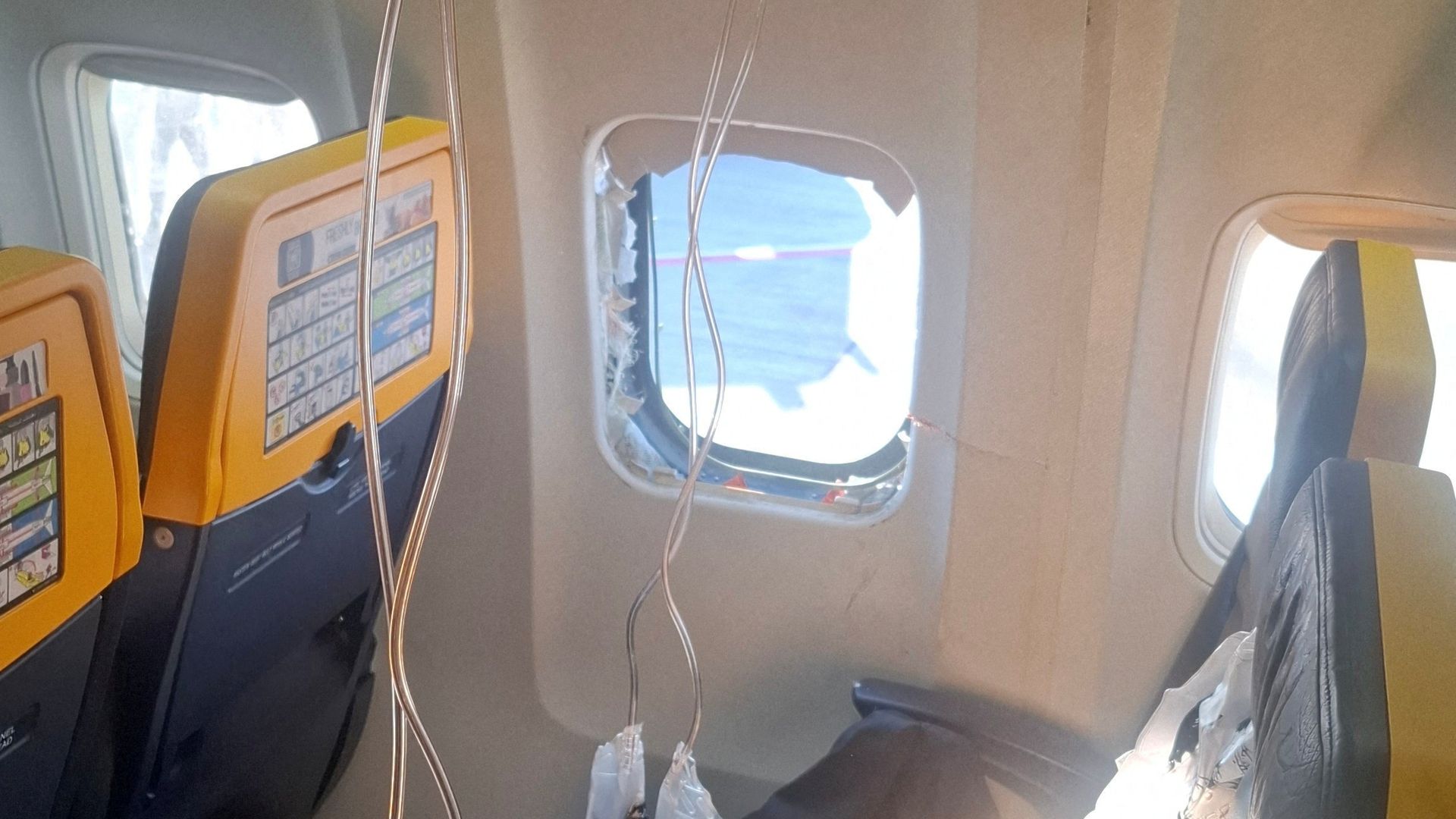
Broken Engine Parts Caused Ryanair Window Blowout, Investigators Reveal
US investigators determined broken engine parts caused a Ryanair flight's window to shatter, partially ejecting a passenger.
Investigators in the United States have determined that broken engine parts were the cause of a shattered window on a Ryanair flight last month, which led to a passenger being partially sucked out of the aircraft. The incident, which occurred on a flight from London Stansted to Dublin, resulted in the plane making an emergency landing.
This revelation sheds light on the specific mechanical failure that endangered passengers and crew. The focus on engine components suggests a complex failure cascade rather than a simple structural issue with the aircraft's fuselage. Understanding the root cause is critical for aviation safety and for implementing preventative measures.
The partial window ejection occurred mid-flight, causing significant alarm among those on board. While the passenger was thankfully able to be pulled back inside the cabin, the event highlighted the extreme dangers posed by cabin depressurization and window integrity failures. Ryanair has not yet commented on the specific findings of the investigation.
This finding is likely to prompt further scrutiny of engine maintenance and inspection protocols for similar aircraft models. Aviation authorities will be reviewing the data to determine if any broader safety directives are necessary to prevent future occurrences. The safety of passengers remains the paramount concern for airlines and regulators alike.
The investigation involved a detailed examination of the aircraft's components, particularly the engines, to identify the source of the debris that impacted the window. The process would have included analyzing flight data recorders and witness accounts from the crew and passengers. The aim is to pinpoint the exact failure mechanism within the engine.
While the exact type of engine and the specific failure mode have not been detailed in the preliminary findings, the confirmation of engine parts as the culprit moves the investigation forward. This contrasts with potential scenarios like bird strikes or manufacturing defects in the window itself, providing a clearer direction for corrective actions.
Experts in aviation mechanics emphasize that engine failures, while rare, can have cascading effects. The high speeds and immense forces involved mean that even a small component failure can generate shrapnel capable of causing significant damage. The investigation will likely focus on whether the failure was due to wear and tear, a manufacturing defect, or an issue with maintenance procedures.
Further details are expected as the investigation progresses, potentially leading to updated maintenance guidelines or even grounding orders for specific aircraft if a systemic issue is identified. The incident serves as a stark reminder of the complex engineering involved in maintaining flight safety.
This article was written by AI based on publicly available news reporting. Original reporting by the linked source.