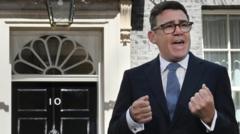
Burnham Becomes Prime Minister, Names Healey Chancellor in Labour Reshuffle
Andy Burnham is the new UK Prime Minister, appointing John Healey as Chancellor and pledging major political change.
Andy Burnham began his tenure as Britain's new Prime Minister on July 20, 2026, by appointing Labour stalwart John Healey as Chancellor of the Exchequer. In his first address to the nation from Downing Street, Burnham declared his intention to "bring back hope" and implement the most significant changes to British politics in four decades.
Burnham outlined plans for a "10-year new plan for Britain" to be unveiled later this year, aiming to chart a course towards a desired national future. He also promised immediate announcements this week designed to provide "breathing space" and "help with the cost of living," while detailing how these measures would be funded.
The new Prime Minister initiated a significant cabinet reshuffle, removing key figures from the previous administration. Rachel Reeves was replaced as Chancellor, David Lammy stepped down as Deputy Prime Minister and Justice Secretary, and Steve Reed was removed as Communities Secretary. John Healey, who had previously resigned from the former government over defence spending disputes, takes on the crucial role of Chancellor.
Healey faces the immediate challenge of securing additional funding for defence, a commitment Burnham aims to uphold. Speaking to broadcasters, Healey stated that he and Burnham would work closely to adhere to fiscal rules, maintain a buffer against economic uncertainty, and focus on making life more affordable for the public.
Further appointments saw Ed Miliband transition from Energy Secretary to Foreign Secretary, succeeding Yvette Cooper, who now heads the Department of Health. Miliband expressed his honor in taking on the Foreign Secretary role, a position previously held by his brother, David Miliband. Shabana Mahmood remains Home Secretary, while Louise Haigh has been appointed First Secretary of State, Chancellor of the Duchy of Lancaster, and Minister for the Cabinet Office, tasked with coordinating government action.
Angela Rayner returns to the cabinet as Housing Secretary, a role she previously held. Wes Streeting, formerly Health Secretary, is the new Defence Secretary. Kemi Badenoch, leader of the Conservative Party, acknowledged Burnham's appointment but criticized his lack of a clear plan, stating Britain needs decisive leadership rather than "people pleasing."
Burnham's initial policy pledge as Prime Minister is to end rough sleeping nationwide, a goal he had previously aimed for as Mayor of Greater Manchester. He also emphasized ambitions to increase youth employment, accelerate council house construction, and ensure the UK meets its defence spending commitments.
The Prime Minister articulated a vision of "building a more preventative state, investing in people's success rather than paying for failure," signaling a potential shift in public service priorities. The coming weeks are expected to reveal the specifics of his cost-of-living support measures and the broader framework of his 10-year plan for Britain.
This article was written by AI based on publicly available news reporting. Original reporting by the linked source.