Burnham Open to Tax Rises for England's Social Care Crisis
Andy Burnham signals potential tax increases to fund a new national care service, aiming to end decades of government inaction.
Andy Burnham has declared a commitment to resolving the long-standing crisis in adult social care in England, a challenge he described as a "major dereliction of public duty" by successive governments. In a notable departure from previous approaches, Burnham did not rule out the possibility of tax rises to finance the necessary reforms, indicating a willingness to confront difficult funding decisions.
England's social care system has been a persistent issue, with reports and reviews highlighting its underfunding and fragmentation. Millions of individuals, including those with chronic conditions like Alzheimer's, rely on these services, while the system faces increasing demand due to an aging population. The current model often places a significant financial burden on individuals, sometimes forcing them to sell their homes to cover care costs.
Burnham outlined plans for a new national care service, emphasizing improved pay and training for care workers. He also stressed the importance of closer integration between social care and the National Health Service (NHS) to alleviate pressure on hospitals and improve patient pathways. A review of social care, led by Baroness Casey, will now be published next summer, a shift from its previously scheduled 2028 release, and is expected to address funding mechanisms for a national care service.
The implications of Burnham's proposals are significant, potentially reshaping how social care is funded and delivered. By integrating care services more effectively with the NHS, the government hopes to achieve cost savings and enhance the overall quality of care. The focus on the workforce, including a planned fair pay agreement from 2028/29, aims to attract and retain staff in a sector often plagued by low wages and demanding conditions.
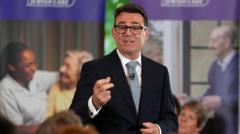
In his address, Burnham drew on personal experience, sharing how caring for his father, who has Alzheimer's, motivated his determination to enact change. He articulated a vision where individuals would not be forced to sell their homes for care, suggesting a collective contribution model, akin to the NHS principle, could protect assets. "If everybody on the NHS principle contributed a little, it would mean everybody could protect the majority of what they'd worked for," he stated.
Burnham has initiated efforts to build cross-party consensus, holding talks with Liberal Democrat leader Sir Ed Davey and Conservative shadow health secretary Stuart Andrew. The aim is to secure broad political backing for any proposed reforms. Conservative leader Kemi Badenoch was unavailable for these initial discussions.
Stuart Andrew, representing the Conservatives, indicated that any changes would need to be supported by a "clear, credible and fully costed plan that delivers better care for the public and value for taxpayers." The exclusion of Reform UK and the Green Party from these initial talks has drawn disappointment from both parties.
Burnham acknowledged the political sensitivity surrounding social care funding, noting that the risk of inaction is greater than the political risk of addressing the issue. He believes that improving social care can yield economic benefits by reducing the strain on the NHS and creating efficiencies within the public sector.
This article was written by AI based on publicly available news reporting. Original reporting by the linked source.