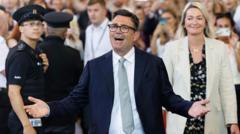
Burnham Poised for PM Role as Starmer Successor; Rivals Stand Down
Andy Burnham will likely become Labour leader and UK Prime Minister after rivals Wes Streeting and Angela Rayner stepped aside, signaling a swift transition.
Andy Burnham has confirmed his intention to stand for the leadership of the Labour Party, a move that positions him as the most probable successor to Sir Keir Starmer and potentially the next Prime Minister of the United Kingdom. Burnham announced his candidacy via social media on a train journey from Manchester to London.
This development follows Sir Keir Starmer's resignation, which appeared to open the door for a leadership contest. However, Burnham's most prominent potential rival, Wes Streeting, quickly endorsed him, significantly diminishing the likelihood of a prolonged internal party battle.
Streeting, who had previously spoken of the importance of a robust debate on policy ideas, stated that it was "better not to spend the summer exaggerating small differences." His decision to withdraw from leadership contention, despite some of his supporters urging him to run, surprised many within the party. Sources close to Streeting indicated that while he and Burnham had spoken, Streeting denied any deal involving a specific cabinet position, though a senior role for Streeting in a Burnham government is now widely anticipated.
Angela Rayner, another figure previously considered a potential leadership candidate, also appears to have stepped back from the race. She issued a statement emphasizing Labour's need to "redouble our efforts to deliver for working people" but did not explicitly endorse Burnham, nor is she believed to be preparing a bid.
Burnham's path to leadership has been marked by scrutiny, particularly following a BBC Newsnight interview where he declined to name the government's fiscal rules, citing his focus on his by-election campaign for Makerfield. This hesitation was noted by some of Starmer's loyalists who reportedly felt Burnham struggled to withstand in-depth questioning on national policy matters.
The swift consolidation of support around Burnham suggests a desire within the Labour Party for a rapid resolution to the leadership question. The absence of a contested election could allow the party to pivot more quickly to campaigning for the next general election.
While Burnham's leadership bid appears to have cleared major hurdles, the precise composition of his potential front bench remains a subject of speculation. The backing of key figures like Streeting, even without explicit confirmation of a deal, signals a degree of unity that could benefit the party.
Questions linger about how effectively Burnham will be able to articulate a clear national policy platform, given past hesitations. The coming weeks will reveal the extent to which the party can rally behind him and present a united front to the electorate.
This article was written by AI based on publicly available news reporting. Original reporting by the linked source.