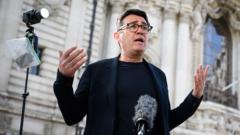
Burnham's T-shirt to Suit Transition Sparks Downing Street Style Debate
Andy Burnham's wardrobe shift from T-shirt to suit signals questions about his political style upon entering Downing Street.
Andy Burnham, the MP for Makerfield, has ignited a sartorial debate as his potential move to Downing Street looms, prompted by his recent train journey from Manchester to London. Boarding the train in his signature dark T-shirt, trousers, and Adidas trainers, Burnham emerged at London Euston in a suit, later adding a tie before arriving at Parliament.
This public display of a wardrobe change has raised questions about whether Burnham intends to adopt a more formal style befitting the Prime Minister's office, or if his casual attire, described as 'normcore' and 'centrist dad,' will persist. His style has been characterized by a deliberate departure from the traditional suit-and-tie uniform often associated with Westminster.
Emma Finamore, features editor at Drapers Magazine, has dubbed Burnham "the king of the casuals," noting his look is "smart but less formal than other politicians" and "aspirational but attainable." She points out that his typical outfits often include high-street staples and brands like Uniqlo and Clarks, contributing to a "smart-Manc costume."
However, a return to suits and ties would represent a regression to Burnham's earlier Westminster persona. Prior to 2020, he was frequently seen in formal attire, including during his 2015 Labour leadership campaign. After leaving Westminster, Burnham began to adopt a more relaxed dress code, stating in 2022 that he no longer felt obligated to wear a suit and tie.
Burnham's "Howick jacket," worn during Covid lockdown debates, has even become an exhibit at Manchester's People's History Museum, symbolizing his distinct political and personal style.
Finamore suggests that Burnham is a "savvy politician" who understands the need to adhere to dress codes when necessary. She believes he will not fully revert to his old style, citing his confidence and the political identity he has found as Mayor of Greater Manchester.
A significant factor influencing Burnham's attire will be the dress code of the House of Commons. While former Speaker John Bercow relaxed rules regarding ties, his successor, Sir Lindsay Hoyle, has indicated a stricter approach, suggesting that even the "King of the North" will need to comply.
This sartorial evolution reflects a broader trend among politicians to present a more accessible image, yet the demands of high office and parliamentary procedure may necessitate a recalibration of personal style, leaving the question of how Burnham's casual approach will fare in the formal setting of No. 10.
This article was written by AI based on publicly available news reporting. Original reporting by the linked source.