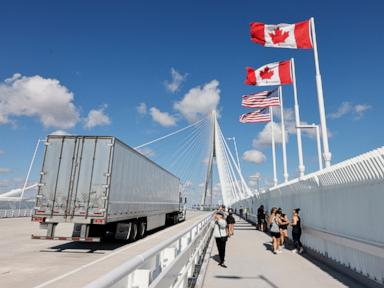
Canada hits US with retaliatory tariffs; Trump warns of escalation
Canada enacted retaliatory tariffs on hundreds of U.S. products, escalating a trade dispute as President Trump threatened further action.
Canada's retaliatory tariffs took effect early Tuesday, impacting hundreds of U.S. products and intensifying a growing trade war between the two allied nations. The levies, some as high as 50%, target goods ranging from aluminum foil and raincoats to cheese, mirroring the value of recent U.S. tariffs.
This move marks a significant escalation after trade negotiations collapsed last month, leading to a cycle of tit-for-tat tariff threats. The dispute threatens to harm businesses and consumers in border states, with U.S. Sen. Susan Collins of Maine expressing concerns.
Canadian officials stated the tariffs apply to approximately $20 billion worth of U.S. products, representing nearly 6% of annual U.S. exports to Canada based on 2025 data. The targeted goods largely align with those recently subjected to U.S. levies.
President Donald Trump has repeatedly vowed a forceful response to the Canadian tariffs. He recently threatened to block the sale of aircraft from Canadian aerospace company Bombardier unless it committed to U.S. manufacturing. Earlier, he had threatened to increase tariffs on Canadian-made cars and auto parts to 50% starting in January.
Trump expressed strong sentiments on his social media platform, stating that Canada is among the "worst Nations in the World to deal with" and asserting, "WE DON’T NEED CANADA, THEY NEED US!"
In a separate, unconventional move, Trump signed an executive order changing the name of Lake Ontario to Lake America. Canadian Prime Minister Mark Carney publicly rebuked this action, reaffirming that the lake remains "Lake Ontario -- today and forever."
Prime Minister Carney also criticized the U.S. administration's approach to negotiations, suggesting a lack of seriousness. He indicated that Canada would be open to discussions once the U.S. ceases using "memes" and "throwing shade" and engages in genuine dialogue.
The ongoing trade dispute raises concerns about the economic impact on both countries, particularly for sectors heavily reliant on cross-border commerce, and highlights a significant strain on the long-standing trade relationship between the U.S. and Canada.
This article was written by AI based on publicly available news reporting. Original reporting by the linked source.