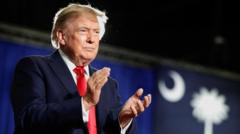
Trump: Canada Seeks US State Benefits After Trade Talks Collapse, Tariffs Loom
President Trump accused Canada of wanting state benefits after trade talks failed, prompting retaliatory tariffs from Prime Minister Carney.
US President Donald Trump stated that Canada desires the "benefits" of being an American state without actually joining the union, following the collapse of trade negotiations late Friday. This marks his first public comment since the breakdown, which triggered the imposition of new 50% US tariffs on a range of Canadian imports. Trump also asserted that American farmers have been subjected to substantial tariffs for years.
Canadian Prime Minister Mark Carney characterized the new US tariffs as a "miscalculation" intended to inflict harm and division. He confirmed that Canada would reciprocate with dollar-for-dollar tariffs on specific US goods, including steel, dairy, appliances, and electronics, effective September 8. "The US and Canada are now in a trade war," Carney declared, adding that "You're at war when you get attacked. We got attacked."
Trump's remarks echo his recurring suggestions of admitting Canada as the 51st state, a notion that has consistently drawn frustration from Canadian leaders and the public. The failure of these trade talks jeopardizes a deeply integrated economic relationship, leaving the path forward uncertain. "We cannot accept what they've offered, and we will not give what they've asked," Carney stated.
Optimism for a deal had been high earlier in the week, but negotiations unraveled as both sides accused the other of introducing last-minute changes. The newly announced 50% US tariffs will affect approximately $20 billion (£15 billion; C$28 billion) of Canadian imports, representing about 5% of the total trade. These levies are in addition to existing US tariffs on Canadian steel, aluminum, automobiles, and lumber. Affected goods include wine, dairy, cement, clothing, and hockey equipment.
Prime Minister Carney explained that Canada's retaliatory measures, the details of which will be released soon, were a reluctant but necessary step to protect national interests. He faces significant pressure following his decision to walk away from the proposed deal.
Leaders from Canada's federal parties, including the Conservative opposition, as well as provincial leaders, have expressed support for the Prime Minister's stance.
Tariffs, a tax on imported goods, have been a central element of Trump's trade strategy, which he argues is designed to bolster American manufacturing and create domestic jobs. Critics, however, contend that these tariffs increase costs for consumers and disrupt the global economy.
In his Saturday address, Carney described the American last-minute changes as "unfair and uneconomic." Conversely, US negotiators, including Trade Representative Jamieson Greer, accused Canada of making new demands and reneging on previously agreed terms. Greer indicated on Fox News that there were no immediate plans to resume talks, and that the US had been prepared to reduce some of its existing tariffs as part of the now-defunct agreement. Carney, however, maintained that the US presented restrictive and unacceptable terms, including limitations on Canadian exports.
This article was written by AI based on publicly available news reporting. Original reporting by the linked source.