Canadian wildfire smoke chokes US Midwest and Northeast
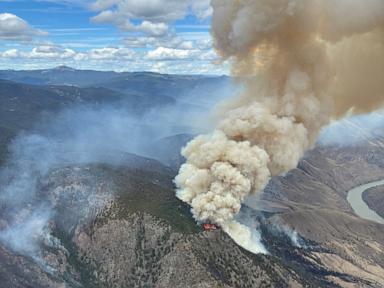
Over 830 Canadian wildfires are sending heavy smoke across the US, creating dangerous air quality from the Great Lakes to New England.
Heavy smoke from more than 830 wildfires burning across Canada descended upon the United States on Wednesday, creating hazardous air quality conditions for millions of people. The plumes of smoke, originating from blazes particularly in west-central Ontario, are being carried south by wind patterns, impacting areas from the Great Lakes region across the Northeast.
This significant smoke event underscores the widespread impact of Canada's active wildfire season. The number of fires, many with little to no containment, has led to mandatory evacuations in some Canadian regions. The sheer volume of smoke produced by fires burning through dense forests is now a transboundary environmental concern.
By Wednesday morning, very heavy smoke was observed over Duluth, Minnesota, and Marquette, Michigan, with extreme smoke blanketing northern Wisconsin. The forecast indicated that heavy smoke would spread to New York State and New England by mid-morning, potentially reaching major metropolitan areas like New York City and Boston by the afternoon.
By Wednesday evening, the smoke was projected to stretch from Buffalo to New York City and Philadelphia, also streaming through cities like Green Bay, Milwaukee, Grand Rapids, and Detroit, as well as Toronto. This widespread haze is expected to persist through the end of the week, although some relief is anticipated with potential rain over the upper Midwest on Friday and the Northeast on Saturday.
While conditions in New York City are not expected to reach the intensity seen in June 2023, air quality alerts have been issued across a vast area. These alerts span from Minnesota to New York City, encompassing entire states like Wisconsin and Michigan. On Thursday, some areas, including Duluth, Green Bay, and Marquette, could experience air quality comparable to some of the worst globally, with skies described as "Mars-like" and a strong campfire odor.
Beyond the Great Lakes region, the smoke is anticipated to reach Cleveland, Columbus, Baltimore, and Washington D.C. by Thursday. Officials warn that the air quality could reach dangerous levels for everyone, not solely for individuals with pre-existing respiratory conditions.
The source material noted that the conditions could be "Mars-like and smelling like a campfire." Forecasts suggest that some of the worst air quality in the world could be experienced from Thursday in locations like Duluth, Green Bay, and Marquette, extending through much of northern Michigan.
Authorities are closely monitoring the situation, with air quality alerts in place to inform the public. The extent and duration of the smoke's impact are subject to weather patterns, with potential improvements forecast by the weekend.
This article was written by AI based on publicly available news reporting. Original reporting by the linked source.