Caracas Faces Hardest Moment After Dual Earthquakes Devastate Venezuela
Dual earthquakes have left Caracas in its darkest hour, with survivors struggling and criticizing the government's insufficient aid efforts.
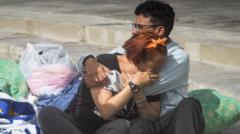
Caracas is experiencing what many residents describe as the hardest moment in Venezuela's modern history following a devastating series of dual earthquakes. Each morning brings renewed grief as hopes for missing loved ones fade and survivors grapple with the grim reality of their shattered lives. The earthquakes have left a trail of destruction, with buildings collapsed and families displaced, forcing many to sleep rough amidst the ruins.
For many Venezuelans, the earthquakes have exacerbated existing hardships in a country already facing significant economic and social challenges. The lack of immediate and substantial government assistance has fueled frustration and a sense of abandonment among those affected. This disaster strikes at a time when the nation's infrastructure and resources are already strained, making the recovery process exceptionally difficult.
Survivors like ex-policeman Jan Carlos Roa Garcia express deep despair, unsure how to rebuild their lives after their homes became uninhabitable. Garcia, a former public servant, refrained from direct criticism of the authorities, but his distress was palpable. Musician Zaira Castro, however, voiced the frustration felt by many, stating that the government's response has been inadequate and that citizens are relying on each other for support.
The implications of this disaster are far-reaching, potentially deepening the ongoing crisis in Venezuela. The government's ability to manage the aftermath, provide essential aid, and coordinate recovery efforts will be critical in determining the nation's path forward. International assistance may become increasingly vital as the scale of the devastation becomes clearer.
In the Chacao municipality, Interim President Delcy Rodriguez faced public anger during a tour of affected areas. Residents confronted her, accusing the government of campaigning amidst tragedy and failing to provide meaningful help. The sentiment expressed highlights a profound disconnect between the authorities and the suffering populace.
The author, who previously served as the BBC's Venezuela Correspondent, noted the personal impact of the disaster, with a friend's mother reported missing in the rubble of the collapsed Petunia building. While a former residence remained intact, the proximity to devastation underscored the widespread impact.
Scenes in the hardest-hit areas, particularly the coastal town of La Guaira, are described as apocalyptic, with over 100 flattened buildings. The desperation of residents is evident as they plead for machinery and immediate assistance to rescue those still trapped.
Despite the overwhelming challenges, rescue teams, both domestic and international, have demonstrated remarkable resilience, working tirelessly through the night. The ongoing efforts to reach survivors trapped in the rubble offer a glimmer of hope amidst the profound despair and growing anger over the disaster's impact and the perceived inadequacy of the official response.
This article was written by AI based on publicly available news reporting. Original reporting by the linked source.