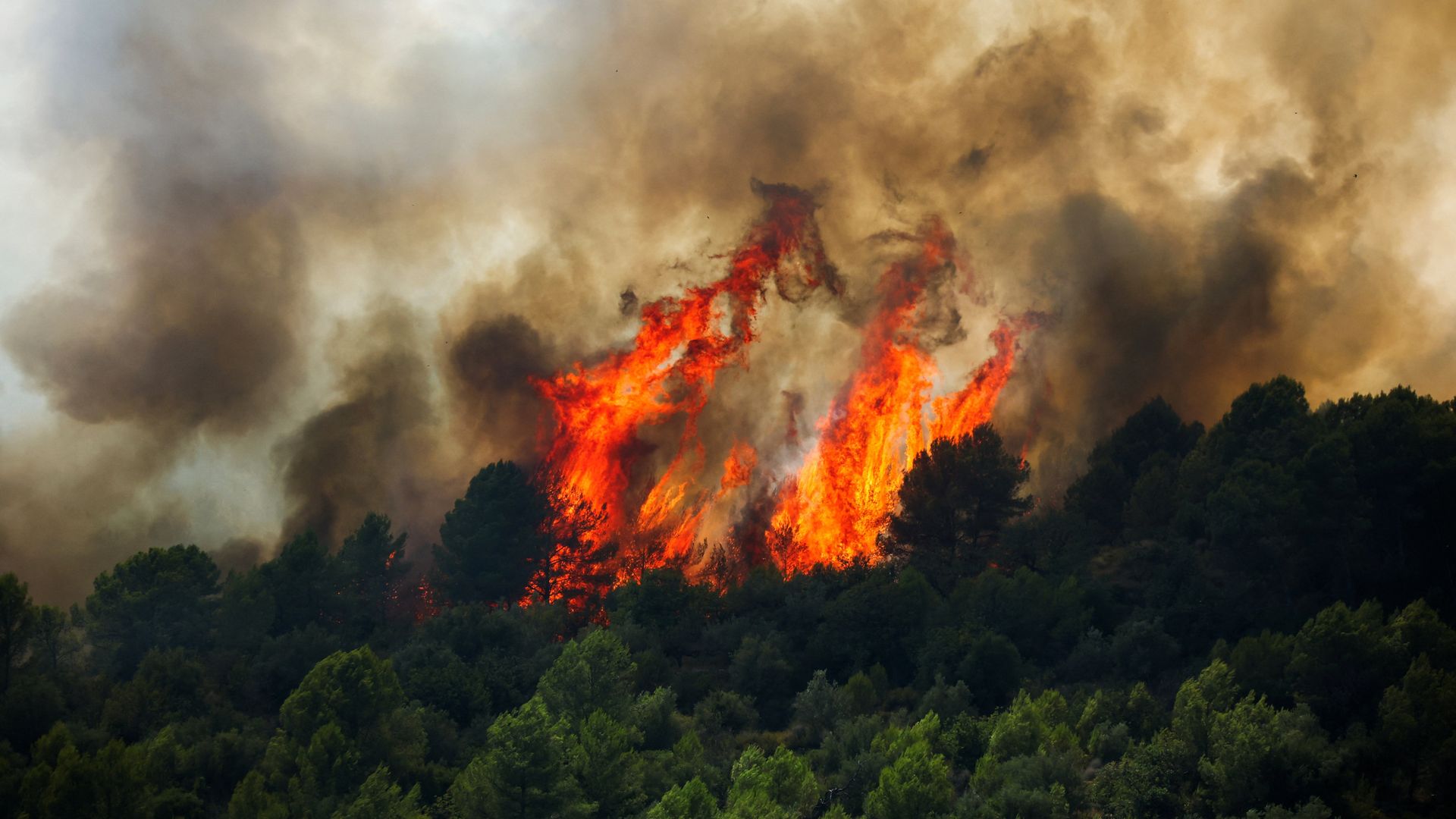
Climate Change Fueled Record Wildfires in France and Spain, Scientists Report
Scientists link human-caused climate change to increased likelihood of devastating wildfires in Spain and France.
Record-breaking wildfires that ravaged parts of Spain and France this summer were made significantly more likely due to human-caused climate change, according to a new analysis by a group of leading scientists.
The findings underscore the growing impact of global warming on extreme weather events, transforming landscapes and threatening communities across Europe.
The scientists, part of the World Weather Attribution initiative, used established scientific models to compare the likelihood of such intense heat and dry conditions occurring in the current climate versus a pre-industrial climate. Their research indicates that human influence has substantially increased the probability and intensity of the heatwaves that fuelled the blazes.
While the specific attribution of individual fires to climate change can be complex, the study highlights a clear trend: the conditions conducive to large-scale wildfires are becoming more prevalent due to rising global temperatures. This has significant implications for fire management, infrastructure, and public safety in regions prone to such events.
The analysis focused on the extreme heat experienced in the regions during the fire season. Researchers found that the heatwaves that contributed to the devastating fires were more intense and occurred with greater frequency than would be expected in a world without human-induced climate change. This scientific consensus points to a direct link between greenhouse gas emissions and the increased risk of severe wildfires.
This is not the first time climate change has been identified as a significant factor in extreme weather events. Similar studies have linked global warming to more intense heatwaves, droughts, and heavy rainfall events in various parts of the world. The current findings add to a growing body of evidence demonstrating the tangible and often devastating consequences of a warming planet.
Officials and emergency services in both Spain and France have been grappling with the unprecedented scale of the wildfires, which have led to widespread evacuations, destruction of property, and significant ecological damage. The summer of 2023 saw some of the most severe fire seasons on record for these countries, stretching firefighting resources to their limits.
Looking ahead, experts warn that without substantial reductions in greenhouse gas emissions, the frequency and intensity of such climate-driven disasters are likely to increase. This necessitates a dual approach: urgent global action to mitigate climate change and enhanced adaptation strategies to build resilience against inevitable climate impacts.
This article was written by AI based on publicly available news reporting. Original reporting by the linked source.