Coast Guard Deploys 1,000+ Personnel for Complex July 4 Security Mission
The U.S. Coast Guard surged over 1,000 personnel and 79 boats to 13 cities for July 4th, calling it one of its most complex missions.
The U.S. Coast Guard has significantly increased its presence across the nation, deploying over 1,000 additional personnel and 79 boats to 13 cities to bolster security for July Fourth celebrations. This surge, in addition to regular forces, marks one of the agency's most complex security undertakings, according to Coast Guard Commandant Adm. Kevin Lunday.
The heightened security measures are designed to prepare for and respond to any potential threats during the holiday period, ensuring public safety at major events. Washington, D.C., in particular, will see enhanced measures, including the closure of a large section of the Potomac River around national monuments to accommodate an unusually large fireworks display.
Adm. Lunday highlighted the multifaceted nature of modern security challenges, emphasizing the Coast Guard's readiness and vigilance. "The Coast Guard remains always ready, always on watch, vigilant for readiness to address any threat and deal with that threat," he stated in an interview. The agency's responsibilities extend beyond traditional port and waterway security to include air assets and counter-drone capabilities.
Beyond visible patrols, the Coast Guard employs less visible but critical security operations. These include counter-unmanned aircraft systems (UAS) teams to address drone threats and cyber operations teams focused on preventing and protecting against cyberattacks. A dedicated planning and intelligence-sharing team coordinates these diverse efforts among various stakeholders to ensure comprehensive preparedness and response.
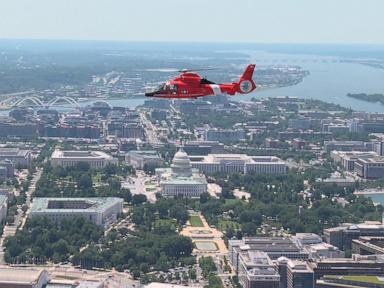
This comprehensive approach was recently demonstrated in a joint exercise with the North American Aerospace Defense Command (NORAD). During the drill, Coast Guard helicopters and NORAD F-16 fighter jets responded to a simulated unauthorized private plane entering restricted airspace near the capital. The exercise involved Coast Guard helicopters attempting de-escalation tactics while F-16s provided air support.
The exercise concluded with the simulated small plane landing without further incident at Joint Base Andrews. This training highlighted the coordinated efforts between different agencies to manage aerial security threats, a key component of the overall July Fourth security plan.
While the specific threats prompting the surge were not detailed, the scale of the operation underscores the perceived risks and the Coast Guard's commitment to safeguarding national celebrations. The complexity is further amplified by the need to coordinate across numerous cities and diverse operational domains, from the water to the air and cyberspace.
As the nation celebrates, the Coast Guard's extensive deployment and integrated security operations aim to provide a secure environment, addressing both conventional and emerging threats with a proactive and vigilant stance. The success of these measures will be critical in ensuring a safe and festive Independence Day for millions across the United States.
This article was written by AI based on publicly available news reporting. Original reporting by the linked source.