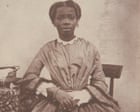
Descendant welcomes biography of Sarah Forbes Bonetta, 'gifted' to Queen Victoria
A descendant discusses the life of Sarah Forbes Bonetta, who was presented to Queen Victoria as a diplomatic gift.
Bayo Randle, the great-great-grandson of Sarah Forbes Bonetta, has welcomed a new biography detailing the extraordinary life of his ancestor, who was presented to Queen Victoria as a "diplomatic gift" from an African king. Bonetta, born Àìná in 1843 in what is now Nigeria, was captured as a child and later brought to England.
Victoria took a keen interest in Bonetta's welfare, funding her education and becoming godmother to her eldest daughter. However, this royal patronage was intertwined with broader imperial objectives. The new book, "Becoming Sarah Forbes Bonetta: A Yorùbá Woman in Queen Victoria’s Court" by Professor Henry Lovejoy, explores Bonetta's journey and the complex circumstances of her life.
"I don’t think a human being, who has agency, could be ‘gifted’ from one to another, but had she not been gifted to Queen Victoria, would I be here today?" Randle, a London-based barrister, reflected on his family history. His perspective highlights the personal legacy of an event rooted in colonial dynamics.
Bonetta was brought to England in 1850 by Frederick Forbes of the Royal Navy’s West Africa Squadron, an initiative established to enforce the abolition of the transatlantic slave trade. Her family was killed in an attack on her town by King Ghezo of Dahomey's forces when she was five years old. It is believed she was captured by the agodjié, the all-female regiment known from "The Woman King," and taken to King Ghezo's court.
Forbes encountered Bonetta while in Dahomey (modern-day Benin) to negotiate an anti-slavery treaty with King Ghezo. The circumstances of her "gift" to Queen Victoria remain a complex and sensitive aspect of her history, reflecting the era's power imbalances and the commodification of individuals.
Despite the potentially coercive origins of her presentation to the Queen, Bonetta received a formal education in England and Scotland. She later married John Davies, one of West Africa's wealthiest men, and had three children. Her life, though marked by these unusual beginnings, saw her navigate European and African societies.
Professor Lovejoy's research aims to offer a more nuanced understanding of Bonetta's life, moving beyond the narrative of a simple "gift" and exploring her own experiences and resilience within the constraints of her time. The biography seeks to illuminate the agency and identity of a Yorùbá woman in the Victorian era.
Randle's engagement with the biography underscores the enduring connection between past events and present-day descendants, prompting reflection on historical narratives and their impact on contemporary families. The book's publication brings renewed attention to Bonetta's remarkable journey.
This article was written by AI based on publicly available news reporting. Original reporting by the linked source.