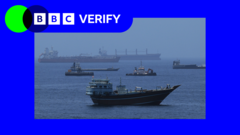
Dozens of ships transit Strait of Hormuz following US-Iran deal
Over 170 vessels have navigated the Strait of Hormuz post US-Iran deal, with Iranian oil exports resuming.
Dozens of ships are now transiting the Strait of Hormuz, a critical global energy chokepoint, following the recent signing of a deal between the United States and Iran aimed at de-escalating tensions and ending regional conflict. Data from maritime intelligence firm Kpler reveals that at least 172 vessels have made the passage since June 18, the day after the agreement was finalized. This uptick in maritime traffic comes as the price of Brent crude oil, the global benchmark, has fallen to its lowest point since the conflict began.
The recent agreement has led to the lifting of a U.S. naval blockade and the easing of decades-old sanctions, allowing for the resumption of Iranian oil exports. According to Jemima Shelley, a senior research analyst at the United Against Nuclear Iran campaign, at least 30 tankers have departed the Gulf laden with Iranian oil and petrochemicals since the deal was struck. The U.S. Treasury has issued a license permitting the sale of Iranian crude oil and other petroleum products until August 21, a significant shift in policy.
Ship-tracking data analyzed by BBC Verify shows that on Monday, at least five previously sanctioned tankers linked to Iran navigated the strait, carrying an estimated four million barrels of oil. However, the overall volume of traffic remains below the pre-conflict daily average of approximately 138 crossings. More than 200 tankers were observed waiting inside the strait on Tuesday, with a smaller number moving westward into the Gulf.
Martin Kelly of the crisis management firm EOS Risk Group noted an increase in "normal" trade alongside the resumption of oil exports. Four liquefied natural gas tankers bound for Qatar's Ras Laffan port were seen on Monday, and several other cargo vessels and tankers sailed out of the Gulf on Tuesday. These transits have predominantly utilized the Iranian-approved northern route, passing through Iranian waters, rather than the U.S.-recommended southern route near Oman.
Despite the increased activity, a substantial number of vessels remain within the Gulf. Ship-tracking data indicates that over 250 tankers and 440 cargo ships are still inside the Gulf, with more than 80% of the tankers either stationary or at anchor. Approximately one in six of these tankers appears to be carrying cargo, suggesting a backlog that will take time to clear.
The deal commits Iran to ensuring the safe passage of commercial vessels through the Strait of Hormuz for 60 days, with no charges imposed. Iran has also agreed to collaborate with Oman on the future administration and maritime services of the strait. The Iranian Persian Gulf Strait Authority (PGSA) has published its transit regulations, requiring a valid passage permit, a step that some ship owners may be hesitant to take due to existing U.S. sanctions on the PGSA.
Conflicting messages have emerged from Iranian officials regarding the strait's status. On Saturday, Iran's Islamic Revolutionary Guard Corps (IRGC) announced the strait's closure in response to Israeli actions in Lebanon, though some traffic continued. More recently, on Tuesday, Tehran's ambassador to the UN in Geneva reportedly stated the strait was open, highlighting the complex and sometimes contradictory information surrounding maritime operations in the region.
The ongoing situation underscores the delicate geopolitical balance in the region. While the deal has facilitated the resumption of vital trade routes and eased oil prices, the compliance and communication surrounding transit regulations and potential disruptions remain critical factors for global shipping and energy markets.
This article was written by AI based on publicly available news reporting. Original reporting by the linked source.