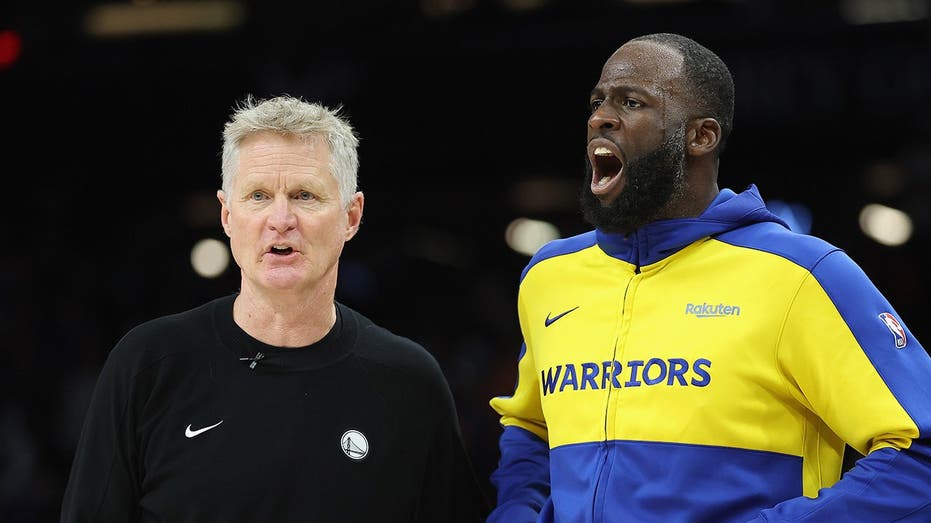
Draymond Green advises Victor Wembanyama on post-game conduct after NBA Finals loss
Draymond Green shared his perspective on respecting opponents after Victor Wembanyama's actions following the NBA Finals loss.
Golden State Warriors veteran Draymond Green has offered advice to rookie Victor Wembanyama regarding conduct after a significant NBA Finals loss. Green, a prominent voice in basketball analysis and a past NBA champion, commented on Wembanyama's actions following the New York Knicks' series victory over the San Antonio Spurs.
Green's remarks stem from a perceived lack of respect shown by Wembanyama towards the victorious Knicks team after the final game. While the exact details of Wembanyama's behavior were not elaborated upon, Green emphasized the importance of sportsmanship and acknowledging opponents, particularly in the high-stakes environment of the NBA Finals. The Warriors forward has himself been a figure of controversy in the past regarding on-court conduct, making his commentary on sportsmanship notable.
During a discussion, Green articulated his view that skipping the traditional post-game line to congratulate the winning team, especially after a series-clinching victory, signifies a deeper issue. He suggested that such an action could be interpreted as a sign of arrogance or a failure to acknowledge the opponent's achievement, stating that "I own you forever" in such a scenario. This perspective highlights Green's belief in the unwritten codes of conduct within professional sports.
The NBA Finals represent the pinnacle of professional basketball, and the conduct of players, especially rising stars like Wembanyama, is often scrutinized. Green's advice suggests a desire to impart lessons learned from his own extensive playoff experience, aiming to guide the young French phenom through the emotional complexities of professional competition.
Wembanyama, in his rookie season, has already established himself as a generational talent, leading the Spurs to an unexpected playoff appearance. However, the transition to the NBA's intense spotlight includes navigating the expectations of public conduct. Green's commentary positions him as a mentor figure, albeit one known for his own fiery on-court demeanor during his playing career.
The broader implication of Green's advice extends to the culture of professional sports. While competitiveness is paramount, the tradition of respecting opponents after a contest is a cornerstone of sportsmanship. Green's words underscore the idea that how a player handles both victory and defeat is as crucial as their on-court performance.
This situation also brings to the forefront the differing perspectives on how athletes should behave. Some may view Wembanyama's actions as a sign of intense focus and a desire to immediately move past defeat, while others, like Green, see it as a missed opportunity to demonstrate respect and maturity. The debate over what constitutes appropriate conduct in the face of loss continues to be a recurring theme in sports discourse.
As Wembanyama continues his career, his interactions and responses to future situations will be closely watched. Green's public commentary serves as an early indicator of the expectations placed upon emerging superstars and the seasoned veterans who aim to guide them.
This article was written by AI based on publicly available news reporting. Original reporting by the linked source.