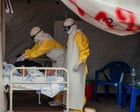
DRC Ebola outbreak may have started January; WHO chief urges lifting travel bans.
WHO chief Tedros Adhanom Ghebreyesus stated the DRC Ebola outbreak potentially began in January, hindering response efforts.
The Ebola outbreak in the Democratic Republic of the Congo (DRC) may have started as early as January, according to the head of the World Health Organization (WHO), Dr. Tedros Adhanom Ghebreyesus. This timeline suggests the virus had a significant head start before being officially identified.
This revelation underscores the complexity and challenges faced in containing the current outbreak. The extended incubation period means the virus could have spread undetected for months, complicating efforts to trace contacts and implement effective control measures.
Dr. Ghebreyesus highlighted that the WHO response is now catching up, with treatment centers established in Ituri province, the most affected region of the DRC. However, he also pointed to significant obstacles, including blanket travel restrictions imposed by some countries, which he stated are disrupting supply chains and hindering the response.
The implications of an earlier start date are substantial. It suggests a wider potential spread than initially understood and emphasizes the critical need for robust surveillance and rapid response mechanisms. Dr. Ghebreyesus called for the lifting of broad travel bans, arguing they impede crucial aid and medical supply delivery.
Community mistrust and low levels of contact tracing remain critical concerns. In Ituri, insecurity and displacement have made contact tracing particularly difficult, with only about 45% of contacts currently being followed up. The WHO aims to increase this figure to over 90% to effectively get ahead of the outbreak.
Scaling up laboratory and diagnostic capacity in affected areas and neighboring regions is a key priority. This is crucial for timely identification and confirmation of cases, allowing for quicker isolation and treatment.
The first identified case in this outbreak was a nurse who sought care on April 24. However, Dr. Ghebreyesus indicated that earlier potential start dates, including January, February, March, and April, are being considered based on the unfolding situation.
The number of suspected cases in the DRC saw an abrupt decrease on Tuesday, falling from over 1,000 to 116, as officials worked to process a backlog of tests and either confirm or rule out diagnoses. This statistical shift highlights the ongoing efforts to accurately assess the scope of the outbreak.
This article was written by AI based on publicly available news reporting. Original reporting by the linked source.