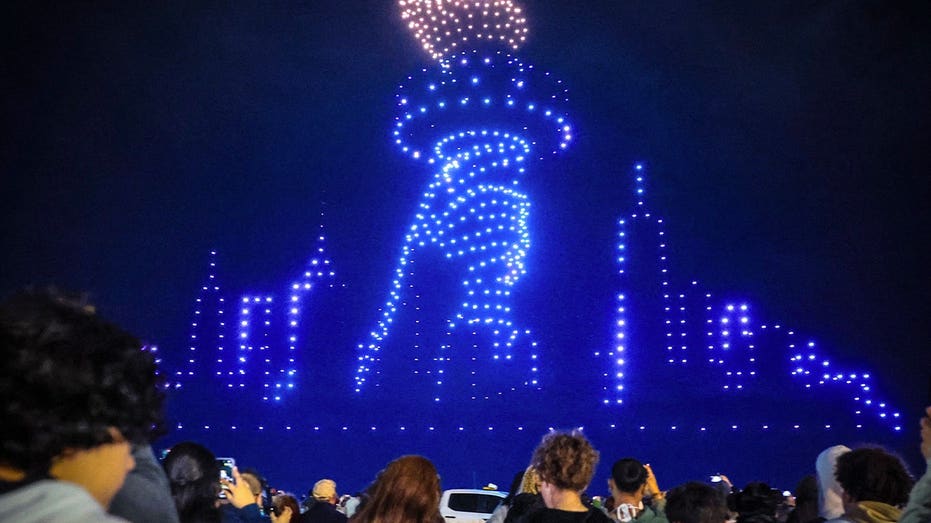
Drone Shows Replace Fireworks, Introducing New Airspace and Security Risks
Drone light shows are becoming a popular alternative to fireworks, but they present new challenges for airspace management and detecting malicious actors.
As the allure of traditional fireworks begins to dim for some, a new high-tech spectacle is taking center stage: drone light shows. These dazzling aerial displays, which use synchronized fleets of drones equipped with lights to create intricate patterns and images in the night sky, offer a visually stunning and potentially safer alternative to pyrotechnics. However, their growing popularity is raising concerns about the increasing complexity of managing shared airspace and the potential for these drones to be misused.
The transition from fireworks to drone shows is driven by a confluence of factors, including environmental concerns, noise pollution, and a desire for more sophisticated visual entertainment. Unlike fireworks, drone shows produce no smoke or debris, making them more appealing in urban areas and for events conscious of their environmental impact. The ability to customize drone shows with specific imagery and messages also offers a unique advertising and entertainment platform.
Despite the benefits, the proliferation of drone light shows introduces a new set of challenges. The sheer number of drones operating simultaneously can make it difficult for air traffic controllers to monitor and manage the airspace effectively. Experts warn that the crowded skies created by these displays could obscure the presence of unauthorized or malicious drones, making it harder to detect potential threats. This presents a significant security concern, as the technology used for entertainment could potentially be co-opted for surveillance or other illicit activities.
The implications of this shift extend beyond mere air traffic control. Security agencies are increasingly concerned about the potential for malicious actors to exploit the growing use of drones. While the focus is often on larger, more sophisticated unmanned aerial systems, the widespread adoption of smaller drones for light shows could create a 'fog of war' effect, making it more challenging to distinguish between legitimate entertainment and covert operations. This necessitates a re-evaluation of current detection and counter-drone strategies.
Industry experts emphasize the need for robust regulatory frameworks and advanced technological solutions to address these emerging challenges. Developing sophisticated detection systems capable of differentiating between friendly and hostile drones in complex aerial environments is paramount. Furthermore, clear guidelines for drone show operators regarding flight paths, altitudes, and communication protocols are essential to ensure public safety and maintain order in the skies.
Comparisons are being drawn to the early days of drone technology, where initial excitement was tempered by concerns over privacy and safety. As drone light shows become more common, a similar learning curve is expected, requiring continuous adaptation from regulators, industry stakeholders, and the public alike. The potential for misuse underscores the dual-use nature of emerging technologies.
Officials are reportedly exploring enhanced surveillance capabilities and collaborative efforts between civilian aviation authorities and defense agencies. The goal is to create a more secure and integrated airspace management system that can accommodate the growing number of drones while mitigating potential risks. The development of standardized identification technologies for drones is also seen as a critical step forward.
Unresolved questions remain regarding the long-term impact of drone shows on airspace management and national security. The pace of technological advancement in drone capabilities, coupled with the increasing demand for aerial entertainment, suggests that this issue will continue to evolve. Finding a balance between innovation and security will be crucial as drone technology becomes an ever-more prominent feature of our skies.
This article was written by AI based on publicly available news reporting. Original reporting by the linked source.