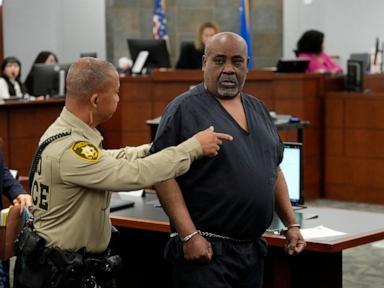
Duane 'Keffe D' Davis Gets 40 Years to Life for Tupac Shakur Murder
Duane 'Keffe D' Davis, the sole person charged in Tupac Shakur's 1996 murder, received a 40-year prison sentence in Las Vegas.
Duane 'Keffe D' Davis, the only individual ever charged in the 1996 murder of rapper Tupac Shakur, was sentenced to 40 years to life in prison on Tuesday. The sentencing took place in a Las Vegas court following his conviction in August.
Davis, 63, was found guilty of murder with the use of a deadly weapon after a trial that concluded earlier this year. The conviction marks the culmination of a decades-long investigation into the drive-by shooting that claimed Shakur's life.
Members of the Shakur family delivered emotional impact statements during the hearing, detailing the profound generational and personal grief caused by the rapper's death. Sekyiwa Shakur, Tupac's sister, stated that taking a life warrants the maximum punishment, allowing time for contemplation of the harm caused.
Judge Carli Kierny emphasized that despite the passage of time since the 1996 shooting, Davis would be held accountable for taking a life. The sentence comes more than 30 years after Shakur was shot near the Las Vegas Strip on September 7, 1996. Shakur died from his injuries six days later.
Over the years, Davis offered a consistent narrative of the events, including confessions in multiple police interviews, his self-published memoir, and on-camera interviews. Prosecutors described him as the "shot caller" in the infamous killing. "I beat the streets, I beat the Feds, and I beat cancer," prosecutor Marc DiGiacomo quoted Davis's own words to the jury during closing arguments, urging accountability for the crime.
Davis, previously a Los Angeles gang leader who later resided in the Vegas suburbs, was arrested in September 2023 and charged with murder. He has remained in custody since his arrest and pleaded not guilty, with his defense team arguing he had lied about his involvement and that evidence did not place him at the scene of the crime. His lawyers contended that there was insufficient proof to establish his presence in Las Vegas that night or his involvement in the shooting from the white Cadillac.
Davis has indicated his intention to appeal his conviction. The prosecution's case relied heavily on Davis's own admissions and statements made over the years, which they presented as consistent confessions to his role in the murder. The defense questioned the veracity of these statements.
The sentencing brings a significant, albeit delayed, resolution to one of hip-hop's most enduring mysteries, highlighting the long arm of the law and the impact of violence within the music industry.
This article was written by AI based on publicly available news reporting. Original reporting by the linked source.