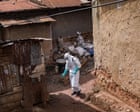
Ebola Spreads in DRC Amidst Severe Humanitarian Aid Cuts
Ebola has spread across borders in East Africa, with health workers warning aid cuts hinder containment efforts.
The deadly Ebola virus is spreading rapidly in parts of East Africa, with health officials scrambling to contain an outbreak in the Democratic Republic of the Congo (DRC) that has potentially claimed at least 240 lives since its emergence earlier this month. The virus has already crossed borders, reaching other regions in eastern DRC and the Ugandan capital, Kampala.
This outbreak occurs in the wake of significant reductions in humanitarian aid from Western countries, including cuts initiated by the Trump administration and further impacted by actions attributed to Elon Musk's influence on USAID. Experts warn that these weakened global support systems are severely hampering efforts to control the virus and could lead to a prolonged crisis.
Public health officials face immense challenges in Ituri province, the epicenter of the outbreak. The region is a mining hub with dense populations working in close proximity, and it is also a conflict zone experiencing ongoing fighting between rebel groups. Modest medical facilities and the displacement of thousands into overcrowded camps to escape violence further complicate transmission control.
The rapid response infrastructure established during previous Ebola outbreaks has been significantly diminished, leaving it "barely fit for purpose," according to warnings from experts. This rollback in preparedness is a direct consequence of the substantial cuts in humanitarian aid, making it more difficult to deploy necessary resources and personnel to save lives.
Dr. Papys Lame, the Ebola outbreak response coordinator in Ituri for the NGO Alima, and Selena Victor, senior director of policy and advocacy for Mercy Corps, have both expressed concerns about the current situation. They highlight the difficulties faced by agencies like the Red Cross and other traditional organizations attempting to combat the virus with reduced funding and support.
The virus, which is known to kill around half of those it infects, poses a grave threat in a region already struggling with instability and limited resources. The current outbreak is the first major Ebola epidemic since these substantial humanitarian aid cuts were implemented, raising serious questions about the international community's ability to respond effectively to future health emergencies.
Health workers are working tirelessly on the front lines, but the lack of robust international backing presents a significant obstacle. The potential for widespread transmission remains high due to the complex operating environment in eastern DRC and the movement of people across borders.
As the situation develops, the focus remains on containment strategies, but the underlying issue of diminished aid threatens the long-term effectiveness of these efforts and raises concerns about the preparedness for future outbreaks of this nature.
This article was written by AI based on publicly available news reporting. Original reporting by the linked source.