Ebola Outbreak 'Out of Control' as Doctors Battle Mistrust and Delays
Doctors on the front lines of the eastern DRC Ebola outbreak describe it as 'out of control,' citing community mistrust and testing delays.
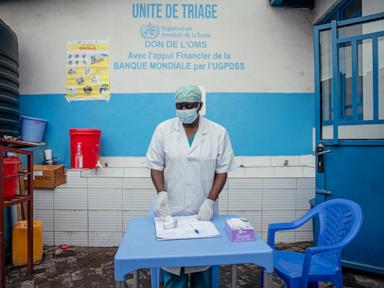
Doctors and public health workers at the epicenter of the Ebola outbreak in eastern Democratic Republic of Congo (DRC) have described the situation as "completely out of control," with the deadly virus spreading at an alarming rate.
Health officials believe this rare strain, known as Bundibugyo, may have been circulating undetected for up to three months before being officially identified. The outbreak was declared a public health emergency of international concern by the World Health Organization last week.
Dr. Richard Kojan, president of the Alliance for International Medical Action, stated from Bunia in Ituri province, the hardest-hit region, that deep mistrust within some local communities is significantly hampering containment efforts. Another clinician, Dr. Richard Lokudi, director of the main hospital in Mongbwalu, the most affected area, reported that seven symptomatic patients suspected of having Ebola had recently "escaped" from his hospital, creating "chains and chains of contamination."
The World Health Organization has identified over 1,000 suspected cases of the Bundibugyo strain in the eastern DRC, with more than 230 suspected deaths recorded. Seven confirmed cases have also been identified in neighboring Uganda. Experts believe the reported numbers are likely an undercount.
Jeremy Konyndyk, a former senior official at USAID, described the outbreak's transmission level as "explosive" and stated the situation is "about as urgent as any Ebola response has ever been." He suggested the 1,000 suspected cases might be "the tip of the iceberg," potentially undercounting the true figures by two to three times.
Compounding the challenge is the unusual nature of the Bundibugyo strain, which has proven harder to identify via testing. Furthermore, skepticism about the virus's existence and a general mistrust of containment measures are prevalent in some communities. This distrust, coupled with a lack of laboratory testing capacity in the region, means that symptomatic patients may wait for days for test results. This delay increases the risk of individuals leaving isolation prematurely, further spreading the virus.
Dr. Kojan highlighted the critical need for enhanced laboratory capacity, essential for accurate diagnosis and effective contact tracing. The current situation leaves clinicians "on the front line" without adequate resources to combat the escalating crisis.
As the outbreak intensifies, international health organizations are working to bolster response efforts, but the combination of the virus's elusive nature and deeply rooted community mistrust presents a formidable obstacle to containment.
This article was written by AI based on publicly available news reporting. Original reporting by the linked source.