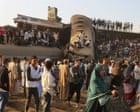
Egypt Train Collision Kills Seven, Injures 125 South of Cairo
Two trains collided south of Cairo, killing at least seven people and injuring 125 others. An investigation has been ordered.
Seven people were killed and at least 125 others were injured when two trains collided on Sunday south of the Egyptian capital, Cairo, officials announced.
The crash occurred in the al-Ayyat district of Giza province, approximately 50 kilometers (30 miles) south of Cairo. The incident involved a train en route to Fayoum province colliding with the rear of another train that was stationary on the same track and headed for the southern province of Aswan, according to the transport ministry.
The health ministry confirmed the casualty figures, noting that over 70 of the injured had been discharged from medical care after receiving treatment. Witnesses described scenes of chaos, with some passengers trapped inside the stationary train's carriages. Residents rushed to the scene, assisting survivors and coordinating ambulance services.
President Abdel Fatah al-Sisi has ordered a prompt investigation into the collision. Survivors recounted the immediate aftermath, describing shock and difficulty breathing due to dust, with nearby villagers providing crucial assistance in rescue efforts.
Train derailments and accidents are a recurring issue in Egypt, often attributed to a history of mismanagement and inadequate maintenance within the country's railway system. Despite recent government initiatives aimed at modernizing the railways, such incidents continue to highlight persistent challenges.
Farha Gamal, a survivor traveling on the Fayoum-bound train, described the harrowing experience. She reported seeing passengers who appeared deceased and others struggling to escape the mangled carriages. The collision resulted in significant damage to at least one of the trains.
Emergency response teams, including cranes, were deployed to the site to clear the wreckage. Efforts were underway to restore train services to their normal schedule as quickly as possible, according to the Egyptian railway authority. The focus remains on recovery, investigation, and addressing the underlying causes of the frequent accidents.
The incident underscores the ongoing need for comprehensive safety reforms and infrastructure improvements within Egypt's vital railway network, which serves millions of commuters and travelers across the country.
This article was written by AI based on publicly available news reporting. Original reporting by the linked source.