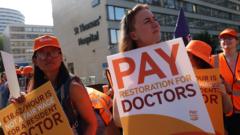
England's Resident Doctors Accept Pay Deal, Ending Three Years of Strikes
Resident doctors in England voted to accept a government pay and jobs offer, concluding three years of industrial action and hundreds of thousands of cancelled appointments.
Resident doctors in England have voted to accept the government's offer on pay and jobs, bringing an end to three years of strikes. The decision was announced on June 29, 2026, following a referendum among British Medical Association (BMA) members.
The acceptance of the offer means an end to the prolonged industrial action that has led to hundreds of thousands of appointments being cancelled across the NHS in England over the past three years. The BMA reported that 53% of eligible members voted in favour of the deal, with a turnout of 57%.
The accepted offer includes a 3.5% pay rise for the current year, with backdated pay to April 1, 2026, resulting in an average increase of 4.9% under the wider package. This pay rise is projected to grow to an average of 6.6% by April 2027, with further increases planned. Starting salaries for resident doctors will now exceed £40,000, and the most senior will earn £76,500 in basic pay, with additional earnings possible for unsociable hours and extra duties.
Beyond salary adjustments, the agreement also commits to creating 4,500 additional training places for newly qualified doctors and covering out-of-pocket expenses such as exam fees. Dr. Jack Fletcher, chair of the BMA's resident doctors committee, stated that the strikes had been avoidable and that a solution benefiting doctors, patients, and the NHS had been available earlier. Health and Social Care Secretary James Murray welcomed the end of disruption, calling it positive news for all involved.
Resident doctors, formerly known as junior doctors, constitute nearly half of all doctors in England and work in various NHS settings, including emergency departments and GP surgeries. The name change to resident doctors was agreed upon in September 2024 to better reflect their expertise after completing their initial medical degrees and foundation training.
The resolution in England contrasts with ongoing or recently resolved disputes in other parts of the UK. Resident doctors in Wales are currently navigating pay and training opportunity negotiations without resorting to strikes. In Scotland, a government pay offer has been accepted by resident doctors. Meanwhile, resident doctors in Northern Ireland were set to begin a 24-hour strike on June 29, 2026.
The industrial action in England has had a significant impact on patient care, leading to the postponement of numerous appointments and procedures. The long-term effects of these cancellations and the recovery process for the NHS are expected to be a key focus in the coming months.
This agreement marks a significant step towards stabilizing the workforce and restoring services. The focus now shifts to the implementation of the promised training places and the long-term impact on doctor retention and patient access to care within the NHS.
This article was written by AI based on publicly available news reporting. Original reporting by the linked source.