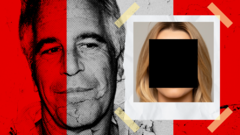
Epstein Assistants Reveal Years of Control, Threats, and Disfiguring Surgery
Former assistants of Jeffrey Epstein detail coercive control, psychological abuse, and forced medical procedures within his alleged 'cult'.
A former assistant, identified only as Anya, has provided a detailed account of her life within Jeffrey Epstein's alleged "cult," revealing years of coercive control, psychological abuse, and forced medical procedures. Anya, who lived in one of Epstein's Manhattan apartments, described how the financier maintained a tight grip on his "assistants" – a group of roughly a dozen women who were housed, worked tirelessly, and were regularly sexually abused by him.
Epstein, who died in 2019 while facing sex-trafficking charges, reportedly referred to his operation as a cult with himself as the leader. Anya's testimony, shared with BBC News Investigations, sheds light on the elaborate deceptions and empty promises used to draw victims in, before systematically exploiting their vulnerabilities. She claims Epstein controlled their finances, dictated their social interactions, and psychologically demeaned them.
"The chains were less obvious, but they were there," Anya stated, contrasting the subtle nature of Epstein's control with physical restraint. She also detailed how Epstein obsessively monitored their bodies, forcing her to undergo unnecessary and disfiguring surgery. Another former assistant, Sarah Kellen, corroborated these claims in testimony to the US House Oversight Committee, describing Epstein's ability to "decimate your ability to make your own decisions and have your own autonomy."
Dr. Tara Quinn-Cirillo, a clinical psychologist specializing in coercive control, commented that such grooming can affect adults, not just children, emphasizing that vulnerability to these tactics is not limited by age. Epstein, following a 2008 conviction for abusing a teenager, reportedly shifted his focus to adult women, many from Eastern Europe, though Anya noted that many still appeared youthful.
Anya described her upbringing in post-communist Russia, where education was emphasized, leading her to pursue a modeling career in Europe. She worked with high-profile brands like Fendi and Chanel, maintaining a support system of friends and family. Her life took a turn in her early twenties when she encountered Epstein through a modeling scout named Daniel Siad in Paris.
Epstein's methods involved creating dependency. Anya recounted how he would isolate his assistants, monitor their communications, and use psychological manipulation to maintain control. The "assistants" were expected to be available at all hours, working under constant supervision. The psychological toll was immense, with victims often struggling to recognize the extent of their entrapment until much later.
After Epstein's death in August 2019, Anya recounted being forced to leave her apartment by his brother, Mark Epstein, who has denied awareness of his brother's alleged wrongdoing. This abrupt eviction signified her physical escape from the environment, though Anya acknowledges the long-term struggle to process the years of abuse she endured.
The accounts from Anya and Sarah Kellen highlight the sophisticated nature of Epstein's coercive tactics, which extended beyond immediate physical threats to encompass deep psychological manipulation. The ongoing investigations into Epstein's network continue to uncover the extent of his alleged criminal activities and the profound impact on the lives of those he controlled.
This article was written by AI based on publicly available news reporting. Original reporting by the linked source.