EU Commission Accused of Falsifying Data to Release Funds to Egypt
Leaked documents suggest the European Commission manipulated figures to release €5bn in loans to Egypt, bypassing welfare targets.
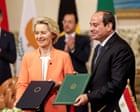
The European Commission faces accusations of deliberately misrepresenting figures to facilitate the release of substantial funds to Egypt, according to leaked documents. The controversy centers on a €7.4bn "strategic and comprehensive partnership" deal, announced by European Commission President Ursula von der Leyen during a visit to Cairo in 2024 with Egyptian President Abdel Fatah al-Sisi.
This significant financial package was intended to stabilize Egypt's economy, curb migrant flows to Europe, and reinforce regional stability amidst ongoing conflict in the Middle East. However, new information casts doubt on the conditions under which a portion of this funding was disbursed.
The core of the dispute involves €5bn in "soft" loans, characterized by lenient repayment terms, a form of macro-financial assistance typically reserved for nations adhering to democratic principles and human rights standards. While EU conditions regarding democracy and rights are often broadly defined, the loan agreements impose more concrete economic reform requirements on Egypt.
Separate data sources, including documents leaked from the EU and information previously available on an Egyptian government website, have raised serious questions. These sources challenge the European Commission's assertions that Egypt successfully met specific targets related to social welfare programs, a key criterion for the release of these funds.
The allegations come at a time when the Egyptian government is under international scrutiny for its human rights record. Reports detail concerns over a crackdown on press freedom, including the imprisonment and alleged torture of journalists. The entire newsroom of the fact-checking platform Matsadaash has reportedly been targeted, and one of the country's few remaining independent news outlets recently ceased operations.
Lina Attalah, a prominent editor from the now-closed outlet, is currently appealing a conviction for "publishing false news," a sentence handed down in absentia without her knowledge. She is also contesting other charges, highlighting a broader pattern of pressure on independent media in Egypt.
These revelations prompt a re-evaluation of the EU's engagement with Egypt and the transparency of its financial aid mechanisms. The discrepancies between the Commission's claims and the evidence presented by leaked documents suggest a potential effort to overlook shortcomings to maintain the flow of funds.
Further investigation is needed to clarify the extent to which the figures were altered and the implications for future EU-Egypt relations and the EU's commitment to upholding democratic values and human rights in its international partnerships.
This article was written by AI based on publicly available news reporting. Original reporting by the linked source.