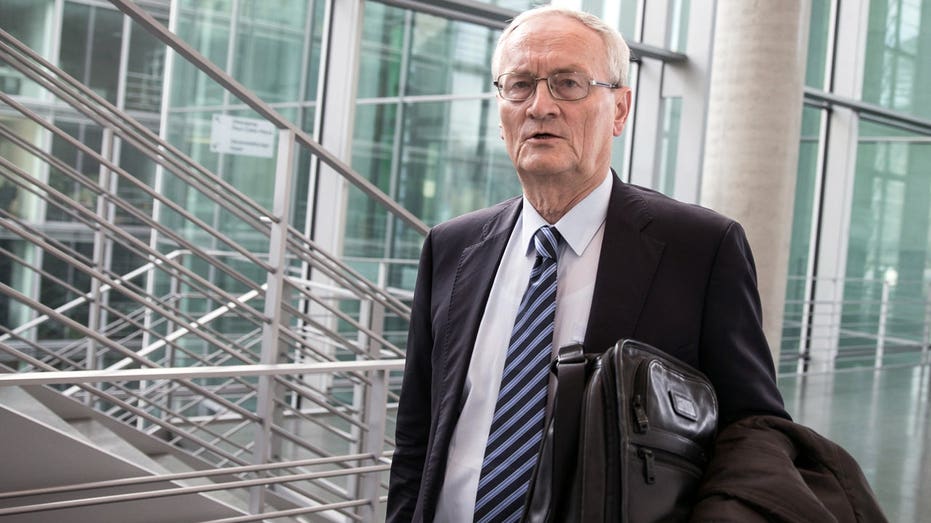
Ex-German Spy Chief August Hanning Arrested on Treason Charges
Germany's former intelligence chief, August Hanning, was arrested on suspicion of treason and espionage, shocking the nation's security apparatus.
Berlin, Germany – August Hanning, the former head of Germany's Federal Intelligence Service (BND), was arrested earlier this week on charges of treason and attempted treason. The arrest, confirmed by federal prosecutors, has sent shockwaves through Germany's intelligence community and political circles.
Hanning, who led the BND from 2005 to 2016, is accused of passing classified information to a foreign power. The specifics of the alleged espionage and the identity of the foreign entity involved have not yet been disclosed by authorities, citing the ongoing nature of the investigation and national security concerns.
The arrest was reportedly carried out by special federal police units. Prosecutors stated that Hanning is suspected of having acted as an agent of a foreign intelligence service, a grave accusation given his former position of immense trust and responsibility. The charges of treason carry severe penalties under German law.
This development raises significant questions about internal security within Germany's top intelligence agency and the vetting processes for its leadership. The BND is Germany's foreign intelligence service, responsible for gathering and analyzing intelligence on international affairs.
Former officials within the intelligence community have expressed surprise and concern over the arrest. They highlighted Hanning's long and distinguished career, during which he was seen as a dedicated public servant. The implications of his alleged actions, if proven, could be far-reaching, potentially impacting Germany's international relationships and its standing in global security matters.
Authorities have emphasized that the investigation is in its early stages and that all legal avenues are being pursued to ascertain the full extent of Hanning's alleged involvement. The public prosecutor's office has requested that further details be withheld to avoid compromising the investigation.
Hanning's tenure at the BND coincided with a period of significant global geopolitical shifts, including the rise of international terrorism and evolving cyber threats. His leadership was marked by efforts to modernize the agency and adapt to new intelligence-gathering technologies.
The case is expected to trigger a thorough review of security protocols and personnel oversight within Germany's intelligence agencies, aiming to prevent any recurrence of such alleged breaches of trust.
This article was written by AI based on publicly available news reporting. Original reporting by the linked source.