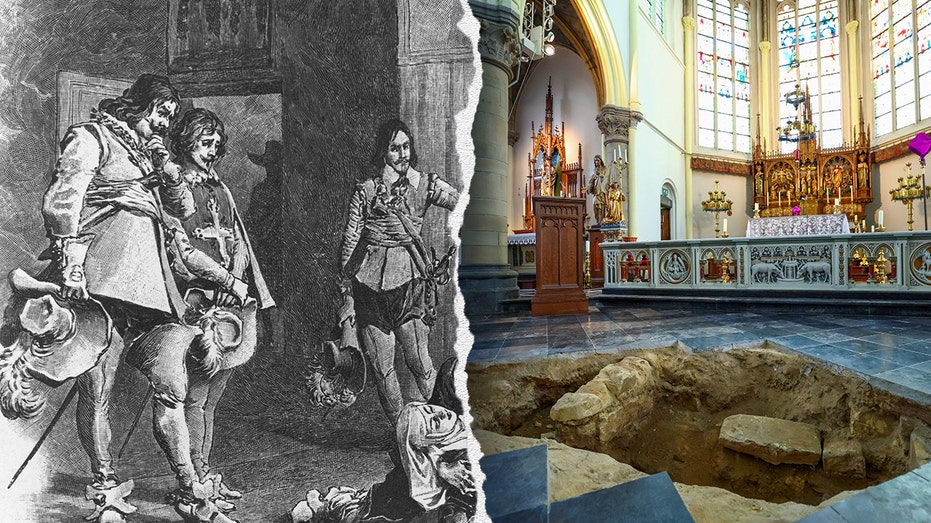
Excavation Blunder Destroys Key Evidence in Search for d'Artagnan's Remains
Improper archaeological work in Maastricht has irreversibly destroyed crucial evidence in the ongoing search for the skeleton of the historical d'Artagnan.
Officials have confirmed that improper archaeological work in Maastricht, Netherlands, has irreversibly destroyed key evidence in the search for the remains of the historical figure Charles de Batz de Castelmore, known to the world as d'Artagnan.
The blunder occurred during excavation work at the site believed to be the final resting place of the legendary musketeer. The incident has cast a significant shadow over the ambitious project aimed at identifying d'Artagnan's skeleton and bringing his story into clearer historical focus.
While specific details of the archaeological oversight were not fully disclosed, authorities stated that the methods employed led to the irreversible destruction of potentially vital evidence. This unexpected turn of events has halted progress on the identification efforts, leaving researchers and historians deeply disappointed.
The implications of this destruction are profound for the historical community. The project, which had garnered international attention, sought to provide definitive proof of d'Artagnan's burial and potentially uncover more about his life and death. The loss of evidence means that confirming the identity of any remains found at the site has become significantly more challenging, if not impossible.
D'Artagnan, who died in the Siege of Maastricht in 1673, has long been a figure of fascination, immortalized in Alexandre Dumas' famous novel. However, his historical existence and precise burial location have been subjects of debate and speculation for centuries. The excavation in Maastricht was initiated to finally settle these historical questions.
Researchers had been meticulously working at the site, employing advanced archaeological techniques to unearth and analyze any potential remains. The hope was to find skeletal evidence that could be subjected to DNA testing and other scientific analyses to confirm its link to the famous captain of the musketeers. The destruction of evidence now jeopardizes years of planning and investment.
Reactions from historical societies and enthusiasts have ranged from dismay to frustration. Many had followed the excavation's progress closely, seeing it as a rare opportunity to connect with a tangible piece of history. The incident raises questions about the protocols and oversight governing such sensitive and historically significant archaeological endeavors.
With the primary evidence compromised, the future of the d'Artagnan identification project remains uncertain. While further investigation into the circumstances of the destruction is expected, the immediate focus shifts to whether any remaining avenues can salvage the mission or if the search for d'Artagnan's definitive resting place must now rely on less conclusive methods.
This article was written by AI based on publicly available news reporting. Original reporting by the linked source.