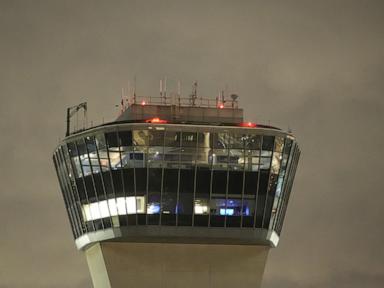
FAA Nationwide Ground Stop Issued Due to Communications Issue; No Malicious Attack Indicated
The FAA issued a rare nationwide ground stop Friday due to an air traffic control communications failure, with officials stating no nefarious attack is suspected.
The Federal Aviation Administration (FAA) issued a rare nationwide ground stop on Friday, halting all domestic flights due to a significant communication issue impacting air traffic control systems. The agency cited "extraordinary circumstances and reasons for safety" as the cause for the unprecedented measure.
This disruption marks the second time since September 11, 2001, that the FAA has been forced to ground all flights across the United States. The previous nationwide ground stop occurred in 2023 when the FAA's NOTAM system, crucial for pilots' pre-departure information, experienced an outage.
Department of Homeland Security Secretary Markwayne Mullin addressed the situation Friday evening, stating that preliminary investigations indicated the incident was a telecommunications outage and there was no current indication of a "nefarious" act. He emphasized that everyone remained safe and that the government would thoroughly investigate the root cause. "This isn't another 9/11. I cannot repeat that enough," Mullin assured the public.
Transportation Secretary Sean Duffy confirmed via an X post that the ground stop was a result of a communication issue affecting all Air Route Traffic Control Centers. These centers manage air traffic for flights above 18,000 feet across 22 locations in the U.S. FAA technicians were actively investigating the problem, Duffy added.
Air traffic control centers are vital for maintaining the separation and safe movement of aircraft. The failure of these communication systems poses a significant risk to aviation safety, necessitating the broad ground stop to prevent potential mid-air collisions or other accidents. Pilots in the air are trained to handle such emergencies, with existing flight plans allowing them to continue their routes safely, according to ABC News contributor John Nance.
Canada's civil air navigation service, NAV CANADA, reported it was monitoring the situation and that the FAA ground stop had no impact on Canadian systems. NAV CANADA affirmed its commitment to supporting the safe movement of air traffic within its own airspace, including any diverted aircraft.
The ground stop caused widespread flight delays and cancellations, impacting thousands of travelers across the country. Airports experienced significant congestion as flights were held on the tarmac, and passengers faced uncertainty regarding their travel plans. The economic impact of such a widespread disruption is substantial, affecting airlines, businesses, and the broader travel industry.
While officials have downplayed the possibility of a malicious attack, the investigation into the precise cause of the telecommunications outage is ongoing. The FAA will likely face scrutiny regarding the resilience of its communication infrastructure and its contingency plans for such failures. The incident raises questions about the security and reliability of the systems that underpin the nation's air traffic control, especially given its reliance on complex technological networks.
This article was written by AI based on publicly available news reporting. Original reporting by the linked source.