FAA Seeks Firings for LaGuardia Controllers After Deadly March Collision
The FAA is moving to fire two LaGuardia air traffic controllers for allegedly leaving work early before a fatal March 22 collision.
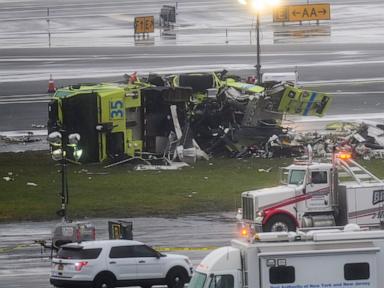
The Federal Aviation Administration (FAA) is seeking to terminate two air traffic controllers at New York's LaGuardia Airport following allegations they left their posts early on March 22, the same night an Air Canada Express jet collided with a Port Authority fire truck, killing two pilots. Sources familiar with the ongoing investigation shared this information with ABC News.
The incident, which occurred shortly after the Air Canada jet landed, resulted in the deaths of Captain Antoine Forest and First Officer Mackenzie Gunther. The collision also led to injuries for 39 other individuals, including two Port Authority workers who were in the fire truck. The National Transportation Safety Board (NTSB) released a preliminary report in April detailing the accident and its immediate aftermath.
According to reports, the FAA is investigating claims that the two unidentified controllers departed about an hour before the fatal crash. The Wall Street Journal was the first to report the agency's intention to fire the controllers. The NTSB's preliminary report indicated that on the night of the crash, one controller was managing two roles simultaneously while the other was coordinating a different emergency, deviating from the standard staffing of two controllers for that shift.
Transportation Secretary Sean Duffy issued a statement emphasizing the dedication of most air traffic controllers while condemning the actions of a few. He stated that when individuals "take advantage of the American taxpayer, unfairly add additional work to their fellow controllers, and impact the airspace -- we have no choice but to act." Duffy affirmed a zero-tolerance policy for fraud and committed to holding those accountable who engage in unlawful practices that disrupt air travel.
Staffing shortages are a known issue within the air traffic control system, and it is not uncommon for controllers to leave shifts early due to the demanding work schedules, which often involve working six days a week. This context, however, does not diminish the seriousness of the allegations in relation to the fatal accident.
The investigation into the final cause of the collision is still active, with the NTSB expected to release its comprehensive report within the next 12 to 24 months. The preliminary report also noted that runway warning lights were functioning correctly prior to the incident.
The National Air Traffic Controllers Association (NATCA) has stated it is discussing the allegations with the FAA. The union's involvement suggests a potential for negotiation or dispute regarding the disciplinary actions.
This push for firings highlights the FAA's commitment to accountability following a tragic event, particularly when allegations point to potential negligence by personnel responsible for air traffic safety. The outcome of the FAA's actions and the NTSB's final report will be crucial in determining the full scope of factors contributing to the March 22 collision.
This article was written by AI based on publicly available news reporting. Original reporting by the linked source.