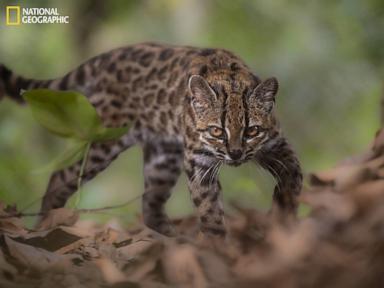
First New Feline Species in 100 Years Discovered in Bolivian Forest
Researchers identified Leopardus tilcayo, a new cat species native to Bolivia's Yungas cloud forest, marking the first such discovery in a century.
A new species of wild cat, identified as Leopardus tilcayo and locally known as the tilcayo cat, has been discovered in Bolivia's Yungas cloud forest. This marks the first new feline species identified by scientists in over 100 years, according to research published in Current Biology.
The small wild cat is native to the Yungas region and weighs no more than three pounds, measuring approximately 18 inches in length, making it smaller than a typical domestic cat. Its discovery highlights the rich biodiversity of the region and the ongoing potential for new scientific findings.
An individual of the species, a male tilcayo cat, was initially kept as a pet by a local family for about a year. The kitten, noted for its leopard-like spots, was later turned over to the Senda Verde Wildlife Sanctuary around 2017 after the family recognized it as a wild animal. This individual is currently the only known member of the species living in protective captivity.
Paola Nogales Ascarrunz, a National Geographic Explorer and co-author of the study, described the animal as "really, really small and skinny" when first encountered. She noted that its physical characteristics, including a "small scrunched-up face, small and round ears, with long whiskers," did not match reference photos of known tiger cats, prompting further investigation.
Previously, elusive tiger cats were often mistakenly classified as other similar-looking species like oncillas or margays. However, advancements in genetic testing allowed Ascarrunz and her research team to compare the genetic makeup of the sanctuary cat with other specimens. By analyzing the complete genetic code, researchers were able to definitively identify Leopardus tilcayo as a distinct new species and also identify another new subspecies within the broader tiger cat group.
Genetic studies have also helped reconstruct an evolutionary tree, suggesting the tilcayo cat likely diverged from a common ancestor of other tiger cats approximately 1.4 million years ago. This genetic work provides a deeper understanding of the evolutionary relationships among these wild felines.
Information regarding the tilcayo cat's exact habitat range and behavior remains limited. While the 10-year-old male at the sanctuary is the sole known captive individual, researchers believe other tilcayo cats may have been captured on camera traps deployed in the cloud forests, offering hope for future study and conservation efforts.
The discovery underscores the importance of continued research and conservation in biodiversity hotspots like the Yungas cloud forest, which may harbor undiscovered species and subspecies, contributing to our understanding of the planet's natural heritage.
This article was written by AI based on publicly available news reporting. Original reporting by the linked source.