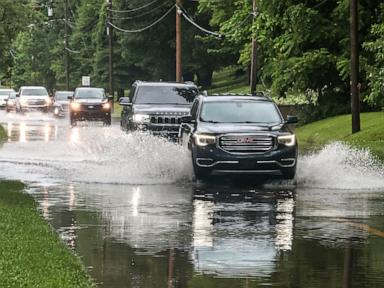
Flash Floods Kill 5 in Kentucky and Tennessee, Triggering Rescues
Five people died due to flash flooding in Kentucky and Tennessee, with heavy rains causing widespread rescues and states of emergency.
Flash flooding claimed the lives of at least five people across Kentucky and Tennessee over the weekend, prompting numerous water rescues and declarations of emergency in affected areas. Kentucky reported four fatalities, while Tennessee confirmed one death as torrential rains inundated parts of the region.
More than 10 inches of rain fell in some areas of Kentucky on Saturday, leading to widespread flooding and dangerous conditions. The National Weather Service had upgraded the flood threat for parts of both states to a moderate risk level 3 out of 4 on Sunday, with predictions of rainfall rates up to 2-3 inches per hour.
In Tennessee, a woman died Sunday while attempting to rescue her son, who had been swept into a culvert by rising waters. The Grainger County Sheriff's Department stated the son managed to reach safety, but his mother was found lodged in the culvert. Between 2.6 and 8 inches of rain had reportedly fallen in some of the most affected counties in Kentucky.
Kentucky Governor Andy Beshear declared a state of emergency, with nine counties issuing their own states of emergency due to the severe weather. He warned of washed-out roads and bridges, advising residents to stay off the roads. The governor also activated price-gouging laws and signed an emergency order to ensure access to essential prescriptions.
Parts of Kentucky, including Owensboro and Somerset, and areas like Knoxville, Tennessee, were identified as having the heaviest rainfall. Flash flood warnings and emergencies were issued for several counties, including Metcalf, Cumberland, and Clinton in Kentucky, where evacuations and flooded homes were reported.
The severe weather event highlights the vulnerability of communities to extreme rainfall events. The speed at which the flooding developed caught many residents off guard, leading to the urgent need for rescue operations.
Officials are continuing search and rescue efforts. The destruction of infrastructure, such as roads and bridges, poses significant challenges for recovery and access to affected communities. The activation of emergency measures aims to mitigate further harm and ensure essential services are maintained.
Unresolved questions remain regarding the full extent of the damage and the long-term recovery efforts needed for the impacted areas. The frequency of such extreme weather events also raises broader concerns about climate resilience and infrastructure preparedness.
This article was written by AI based on publicly available news reporting. Original reporting by the linked source.