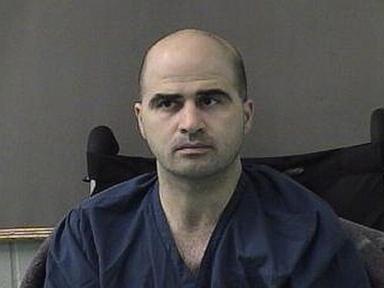
Fort Hood Shooter Nidal Hasan to be Executed by Army Firing Squad
Nidal Hasan, convicted of the 2009 Fort Hood massacre, will be executed by firing squad, the Pentagon announced.
The Pentagon announced Monday that Nidal Hasan, the former Army psychiatrist convicted of the 2009 mass shooting at Fort Hood, Texas, will be executed by firing squad. This marks the first U.S. military execution in over six decades.
The 2009 shooting spree claimed the lives of 13 people and wounded 32 others. The decision for execution was recommended by Defense Secretary Pete Hegseth and approved by President Donald Trump, according to Pentagon spokesperson Sean Parnell.
While the specific date and location of the execution are yet to be disclosed, Army policy mandates that executions must occur within 150 days of presidential approval, but no sooner than 60 days. Hasan, then an Army psychiatrist, opened fire on November 5, 2009, at the Soldier Readiness Processing Center on the Fort Hood base, killing 12 soldiers and one civilian before he was apprehended after being shot and wounded.
Hasan was found guilty of 13 counts of premeditated murder and 32 counts of attempted murder in 2013. He received a death sentence and was subsequently transferred to a military detention facility at Fort Leavenworth, Kansas. He is currently one of four inmates on death row within the Army's justice system.
The announcement follows reports from June indicating the Army was preparing for military executions. Internal documents and officials familiar with the matter revealed a plan, codenamed Operation Resolute Justice, issued in February. This operation directed Army officials to coordinate with the Federal Bureau of Prisons for the transfer of condemned prisoners from Fort Leavenworth to the federal execution facility in Terre Haute, Indiana.
The Fort Hood shooting remains one of the deadliest incidents of its kind on a U.S. military installation. The attack sent shockwaves through the nation and raised critical questions about security and mental health support within the armed forces. Hasan, who represented himself during parts of his trial, had previously expressed his motivations, which were reportedly linked to his radicalized beliefs.
His conviction and subsequent death sentence have been a long-awaited conclusion for the victims' families and colleagues who have sought justice for the horrific events of that day. The execution, when carried out, will represent the final chapter in a case that has spanned over a decade and highlighted significant challenges in the military justice system.
Questions remain about the specific protocols that will be followed for the execution by firing squad, a method not used by the U.S. military since the 1960s. The Army's renewed focus on preparing for executions underscores a significant shift in its approach to capital punishment for military personnel convicted of capital offenses.
This article was written by AI based on publicly available news reporting. Original reporting by the linked source.