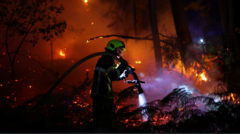
France battles 'whirlwind' fires, evacuating 55,000 more
France evacuated 55,000 more people as wildfires created their own "whirlwinds," burning 42,000 hectares.
France has ordered the evacuation of an additional 55,000 people from six towns in the Gironde region, south of Bordeaux, as wildfires continue to rage across the country with increased intensity.
The fires, exacerbated by dry vegetation and strong winds, have become a significant challenge for authorities, creating an erratic and unmanageable situation. Captain Nicolas Braz, a leader in the firefighting operation, described the fire generating its own winds, including "whirlwinds," making containment exceptionally difficult.
This latest wave of evacuations adds to the growing displacement across Europe. In France, a total of 42,000 hectares have been consumed by flames, marking one of the largest forest fire areas since World War II. Since the start of the year, approximately 98,000 hectares have burned nationwide. The A63 motorway, a crucial route to Spain, has seen 60 kilometers closed due to the fires.
French Interior Minister Laurent Nunez stated that bringing the fires under control will be a lengthy process, and evacuated residents and tourists will not be able to return until the situation is contained. The French military has been mobilized to support firefighters, assisting with brush clearing and the creation of firebreaks.
President Emmanuel Macron has pledged government support for rebuilding efforts, assuring that France "would rebuild and his government would be there for as long as is needed." The ongoing crisis underscores the severe impact of climate change on weather patterns and the increasing frequency and intensity of extreme weather events.
Across Europe, the wildfires have affected multiple countries. Spain has seen over 90,000 people evacuated from areas near Madrid and Ávila, with further evacuations ordered near Toledo. The regional president of Madrid, Isabel Díaz Ayuso, described the fire situation as the "worst fire in the history of the region."
Authorities in València confirmed the death of one man due to a fire, highlighting the human cost of the blazes. Forecasters predict high temperatures and low humidity for Sunday, potentially allowing the fires to spread further, adding to the urgency of the response.
Efforts to combat the fires are ongoing, with international cooperation and significant resource allocation from both military and civilian agencies. The long-term implications for affected regions, including ecological damage and economic impact, are expected to be substantial.
This article was written by AI based on publicly available news reporting. Original reporting by the linked source.