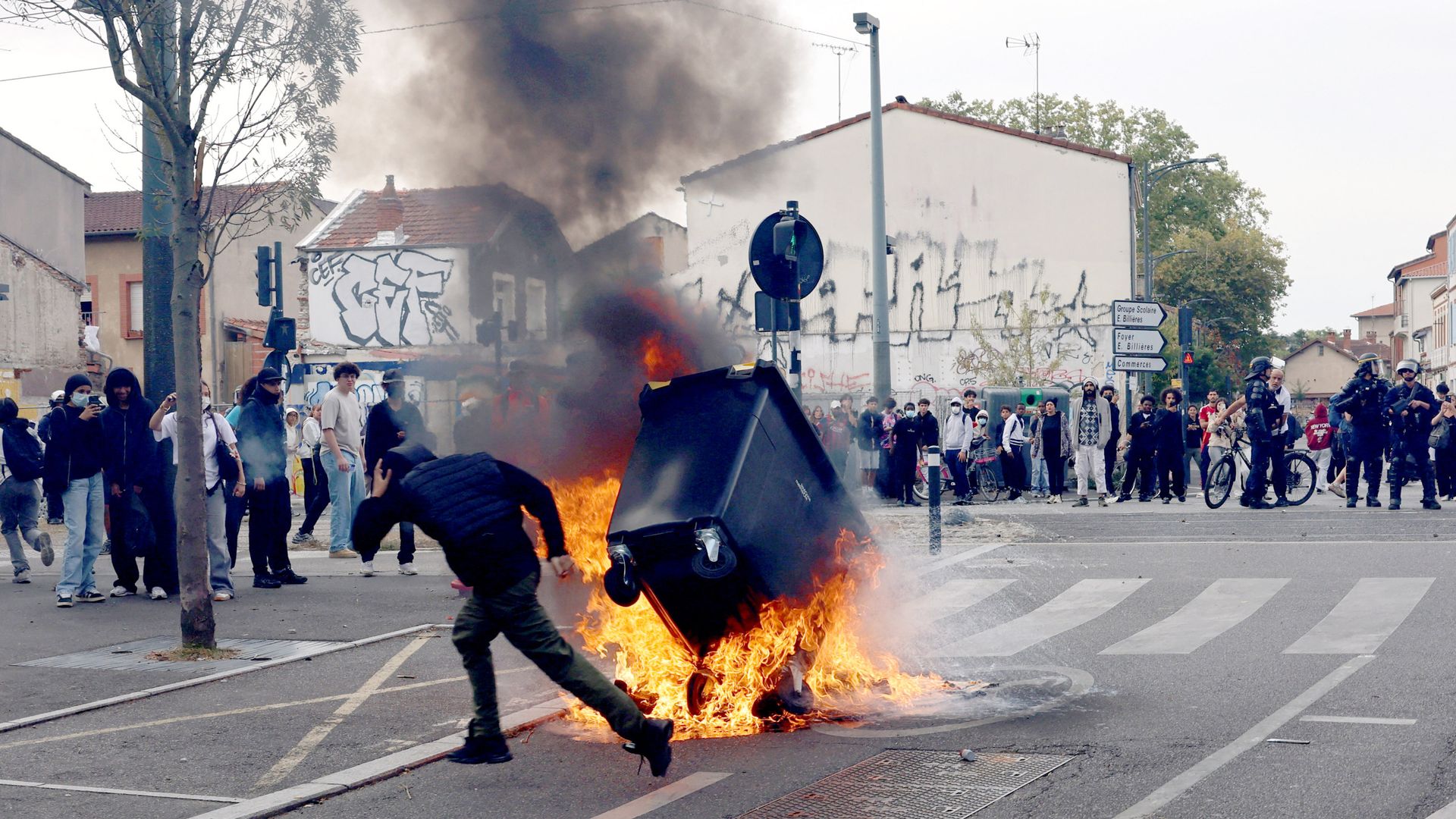
France Closes 400 Schools Amid Violent Student Protests, Tear Gas Deployed
Student protests erupt across France, forcing hundreds of school closures and leading to violent clashes with police.
Student demonstrations have escalated across France, with approximately 400 schools nationwide compelled to close their doors in an attempt to de-escalate the growing unrest. The protests, which have seen clashes between students and authorities, have led to the deployment of tear gas in several urban centers.
The widespread school closures underscore the severity of the situation and the government's efforts to regain control. The reasons behind the student discontent remain multifaceted, with various groups voicing grievances related to educational policies and broader societal issues.
Reports from affected areas describe scenes of considerable disruption, including fires set in the streets and confrontations involving police. The use of tear gas by law enforcement indicates a significant escalation in the intensity of the demonstrations. While specific demands vary among protesting groups, a common thread appears to be a call for greater student voice and reform within the French education system.
The implications of these prolonged protests extend beyond the immediate disruption of schooling. They signal a potential for wider social unrest and raise questions about the effectiveness of current government strategies in addressing student concerns. The coming days will likely see continued monitoring of the situation and potential further responses from both student organizers and authorities.
This wave of protests is not unprecedented in France, a country with a history of student activism that has often played a role in shaping public discourse and policy. Past movements have frequently focused on issues such as university access, curriculum changes, and the overall direction of public education.
The decision to close a significant number of schools is a drastic measure, highlighting the challenges authorities face in balancing the right to protest with the need to maintain public order and ensure the safety of students and staff. The economic and social costs of such widespread closures are also a considerable concern.
Reactions from various stakeholders have been mixed. While some student groups have expressed solidarity and continued calls for action, educators and parents have voiced concerns about the impact on learning and the safety of young people. The government has maintained a firm stance, emphasizing the need for dialogue but also condemning acts of violence and vandalism.
As the situation evolves, several questions remain unanswered. The specific triggers for the current surge in protests, the extent of coordination among different student groups, and the long-term impact on educational policy are all areas that will require further examination.
This article was written by AI based on publicly available news reporting. Original reporting by the linked source.